Troubleshooting
Why Is My Candle Tunneling? Causes and Fixes
Candle tunneling happens when wax burns straight down the middle, leaving a ring of unmelted wax on the sides. Here's why it happens and how to fix it.
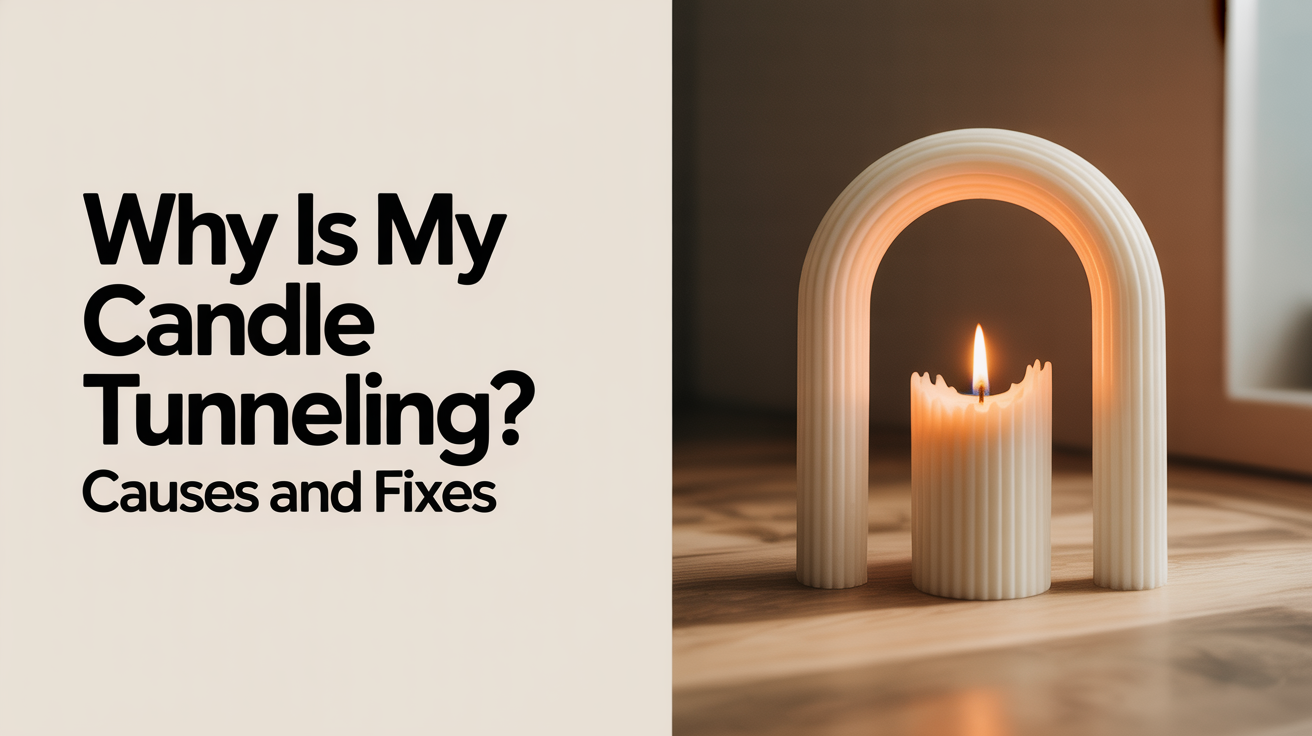
Tunneling is when a candle burns straight down the center, creating a deep hole surrounded by a thick wall of unmelted wax. That wax is essentially wasted, it'll never reach the wick, and the candle will drown long before it burns down evenly. The good news: tunneling is fixable, and once you understand what causes it, it's easy to prevent.
What Is Candle Tunneling?
When you light a candle, the heat from the flame should melt wax all the way to the edge of the container, creating a full melt pool. If that melt pool never reaches the sides, the flame works its way straight down through the center instead.
Over time, the tunnel gets deeper. Eventually the wick sits so far below the wax rim that it can't get enough airflow, and the flame either sputters or extinguishes entirely. Tunneled candles can lose 30 to 50 percent of their usable wax this way.
A shallow melt pool (less than about half a centimeter) after the first hour of burning is an early warning sign. A full melt pool should reach edge to edge within two to four hours, depending on the container's diameter.
The Main Causes of Candle Tunneling
The Wick Is Too Small (For Makers)
This is the most common cause when you're making candles yourself. If the wick diameter is too small for your container, it simply cannot generate enough heat to melt wax all the way to the glass walls.
Wick sizing depends on the container's inner diameter, the wax type (soy runs cooler than paraffin), and whether you've added fragrance oil or colorant. A wick that tested fine in a four-inch jar may be a complete mismatch in a five-inch jar.
Never guess on wick size. Burn test each new combination, different wax batches, containers, or fragrance loads can require different wicks even when everything else looks similar.
The First Burn Was Too Short (For Users)
This is the most common cause on the user side, and it's behind a huge share of tunneling complaints. Wax has what chandlers call a "memory ring", it tends to melt only as far as it did the first time you lit it.
If your first burn lasted 30 minutes instead of the recommended two to four hours, the melt pool only reached a few centimeters across. Every subsequent burn follows that same narrow path, and the tunnel deepens a little more each time.
The first burn is the most important one. It sets the wax's behavior for the life of the candle.
Drafts and Uneven Airflow
Burning near an open window, a vent, or a fan can push the flame to one side, which means wax melts unevenly. You end up with one side of the candle melting faster than the other, not classic tunneling, but a close cousin that wastes wax in a similar way.
Always burn candles away from drafts, and keep them on a flat, level surface. Tipping the container even slightly changes where wax pools.
Short Repeated Burns
Repeatedly burning a candle for under 30 minutes adds up to the same problem as a short first burn. The wax never has time to fully liquefy across its diameter, so the tunnel gradually forms even if you were careful about the initial lighting.
A rough guide: burn one hour for every inch of container diameter. A three-inch jar needs at least three hours per session to maintain an even melt pool.
Quick Reference: Cause and Fix
| Cause | Fix |
|---|---|
| Wick too small | Re-wick; test with a larger wick diameter |
| First burn too short | Use the foil method to rescue; reset habits going forward |
| Repeated short burns | Extend burn sessions; follow the one-hour-per-inch rule |
| Drafts moving the flame | Move the candle away from vents and windows |
| Wrong wax type for wick | Re-test wick with your specific wax and fragrance load |
How to Fix a Tunneling Candle
The Foil Wrap Method
This is the most reliable way to rescue a candle that has already developed a tunnel. You're using reflected heat to melt the wax walls down to the level of the melt pool.
Here's what to do:
- Light the candle and let it burn for about 30 minutes so the wick is established.
- Tear off a piece of aluminum foil large enough to wrap around the top of the candle container, with a few inches to spare.
- Fold the foil over the rim of the container, leaving an opening of two to three centimeters directly above the wick (enough for airflow and oxygen).
- Leave the candle burning for one to two hours. The trapped heat will gradually melt the wax walls inward.
- Check on it every 15 to 20 minutes. Never leave it unattended. The foil concentrates heat, if the melt pool gets too deep or the wick starts flickering, remove the foil and let the candle settle.
- Once the wax surface is level and the melt pool covers edge to edge, remove the foil carefully (it will be hot). Let the candle burn for another 30 minutes to seal the reset, then extinguish.
Safety note: do not let the foil touch the flame. Keep the opening centered above the wick. Don't use this method if the wick is already very short or if the candle is sitting on a surface that can't handle heat.
The Warm Oven Method (Lower Risk, Slower)
If the tunnel is deep but the candle hasn't been lit recently, you can soften the wax walls by setting the candle (without the lid) in an oven at the lowest setting, typically around 170°F (77°C), for 5 to 10 minutes. The surface wax will soften and level out. Remove it carefully, blot up any excess liquid wax with a paper towel if needed, and let it cool flat.
This doesn't fix the root cause, a wick that's too small will still tunnel next time, but it gives you a flat starting surface to work with.
Scooping Out the Excess Wax
A more hands-on option: use a butter knife or a small spoon to gently carve out the hard wax walls, bringing them closer to the level of the tunnel. Do this while the candle is cold and the wax is solid. Then when you light it again, the wick has less surrounding wax to compete with, and a shorter burn session can reach the sides.
This is a good option if the tunnel is severe and the foil method would require too many hours of supervised burning.
How to Prevent Tunneling When Making Candles
Choose the Right Wick for Your Container
Start with the wick manufacturer's recommendations for your container diameter and wax type, then burn test from there. The standard test: light the candle, let it burn for four hours, and measure the melt pool. If it doesn't reach edge to edge, size up. If it's smoking or the flame is very large, size down.
Keep records. Note the wax brand, container diameter, wick series, and fragrance load for each test. This data saves you from starting over on every new batch.
For more on why your finished candle might have issues even with the right wick, see why your candle has a weak scent throw.
Pour at the Right Temperature
Pouring soy wax too hot or too cool can affect how it adheres to the container and how the melt pool forms. Most soy waxes do best poured between 120°F and 140°F (49–60°C). Follow your wax supplier's guidance, it's usually on the product page or technical data sheet.
A candle that looks fine after pouring can still tunnel if the wax has internal stress cracks or uneven adhesion from a poor pour temperature.
Let the Candle Cure
Soy wax in particular benefits from curing, resting for 48 to 72 hours after pouring before the first burn. Curing allows the wax molecules to fully set and can improve scent throw and melt pool behavior. A candle that tunnels right out of the mold might perform better after curing, so don't judge a new batch on the first day.
Communicate Burn Instructions to Anyone You Gift Candles To
If you make candles for gifts, include a small card explaining the first burn rule. Most tunneling on store-bought and handmade candles happens because the recipient didn't know about the memory ring and extinguished the candle after 20 minutes. A simple note, "first burn: let it melt edge to edge, at least 2 hours", prevents most tunneling complaints before they start.
Frequently Asked Questions
Can a severely tunneled candle be saved?
Yes, in most cases. The foil method works even on deeply tunneled candles as long as the wick is still accessible and long enough to hold a flame. If the wick has drowned in liquid wax and gone out, you'll need to drain some wax first (using a dropper or turkey baster) to expose it, then trim the wick to about a quarter inch and try the foil method. For more on drowning wicks, see why is my candle wick drowning or won't stay lit.
Why does my soy candle tunnel more than paraffin?
Soy wax has a lower melt point and burns cooler than paraffin, so it's more sensitive to wick size. A wick that's adequate for paraffin may be too small for soy in the same container. Soy also tends to form a softer melt pool, which means the tunnel can deepen faster if the wick is even slightly undersized. Always wick-test soy candles separately from paraffin, even in the same container.
How long should my first burn be?
Long enough for the melt pool to reach edge to edge, typically two to four hours for most standard containers. Wider containers take longer. A three-inch jar might take 2.5 hours; a four-inch jar might need closer to four. The key indicator is the melt pool reaching the glass, not the clock.
Does the foil method work on jar candles?
Yes. In fact, the foil method was designed for jar and container candles, where the glass holds heat and the foil creates a mini oven effect. It's less applicable to pillar candles, which have different airflow dynamics. For pillar candles, the main fix is hugging the flame with foil loosely, but pillar tunneling is usually a wick issue that requires replacing the candle.
Can I use a hair dryer instead of foil to melt the wax walls?
A heat gun (not a hair dryer) can soften wax walls quickly, and some makers use this to level a surface before a burn. The problem is it only fixes the surface, you still need to burn the candle correctly to create a real melt pool. The foil method works from the inside out (the flame's own heat does the work), which is more controlled. A heat gun applied carelessly can also scorch wax or discolor it. If you go this route, use low heat and keep the gun moving.
Tunneling is one of the more frustrating candle problems because it wastes material and makes a candle look and perform worse than it should. The fixes are practical and don't require special tools, just patience, a bit of foil, and attention during the burn. And once you've burned your next candle correctly from the first lighting, you'll see the difference immediately.
If you're also dealing with a white, chalky coating on the wax surface, that's a different issue entirely, see what is candle frosting and how to prevent it for the explanation.