Getting Started
Candle Making Safety: A Beginner's Guide to Working With Hot Wax
Learn candle making safety before you pour your first batch. Covers hot wax temps, safe setups, fire prevention, and what to do if something goes wrong.
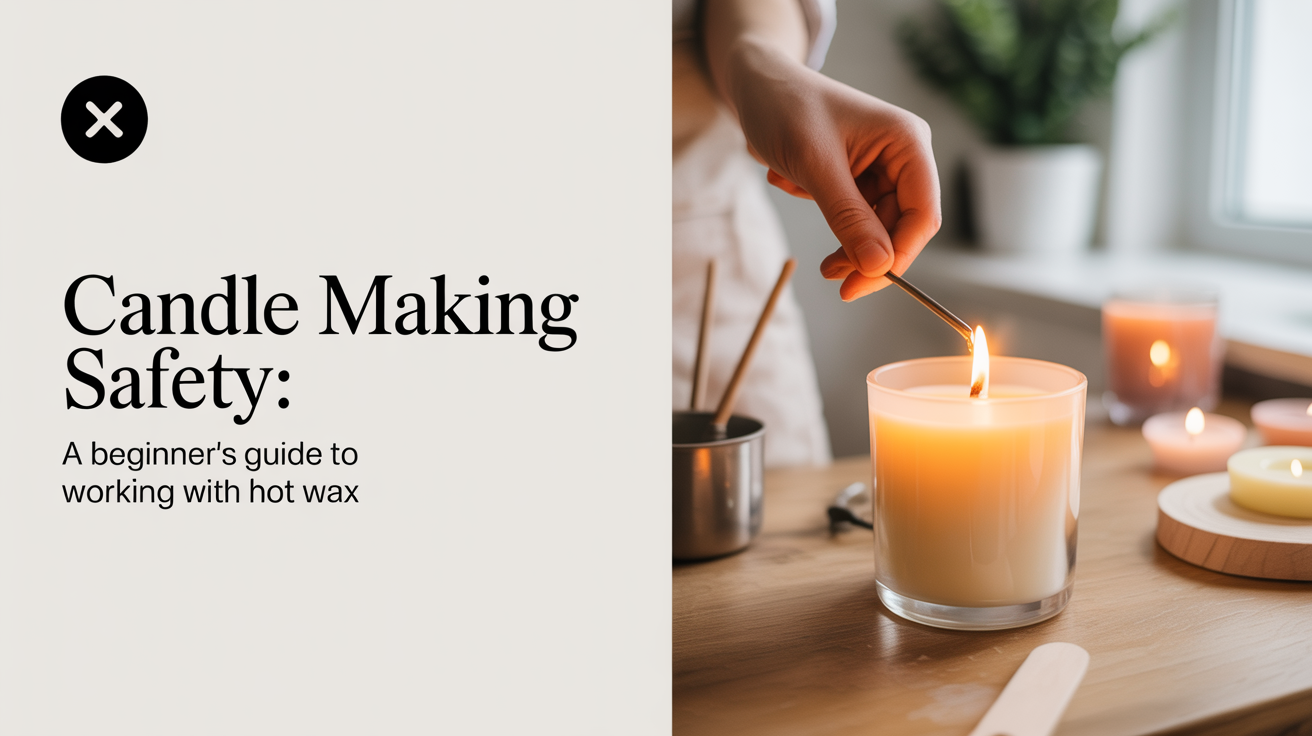
Candle making is a genuinely approachable hobby, but it does involve hot wax, open flame, and fragrance oils that have flashpoints to respect. The good news is that most accidents happen for the same small set of reasons: wax heated too fast, a distraction at the wrong moment, or a workspace that wasn't set up with heat in mind. Get those three things right and you'll pour cleanly, batch after batch.
Before your first pour, read through this guide once. It takes about ten minutes and it covers everything you need to work confidently with hot wax at home.
At a Glance
- Wax melts around 120-145°F (49-63°C) for most container waxes, well below its flashpoint (typically above 300°F / 149°C), so the real risk is skin burns and overheating, not sudden combustion.
- Use a thermometer every time, never apply direct high heat, and never leave melting wax unattended, even to answer the door.
- If wax catches fire, smother it with a metal lid. Never pour water on burning wax; it sprays and spreads the fire.
- Fragrance oils add their own two safety numbers: flashpoint (add fragrance below it) and usage rate (typically 6-10% of wax weight).
- Don't move a candle while wax is still liquid in the center, even if the surface looks set, and don't handle a jar or tin for at least two hours after pouring.
- Burn-test every batch before gifting or selling: flame height under 1 inch (2.5 cm), no excessive wick mushrooming, and a melt pool that reaches the edges without tunneling.
Understanding How Hot Wax Behaves
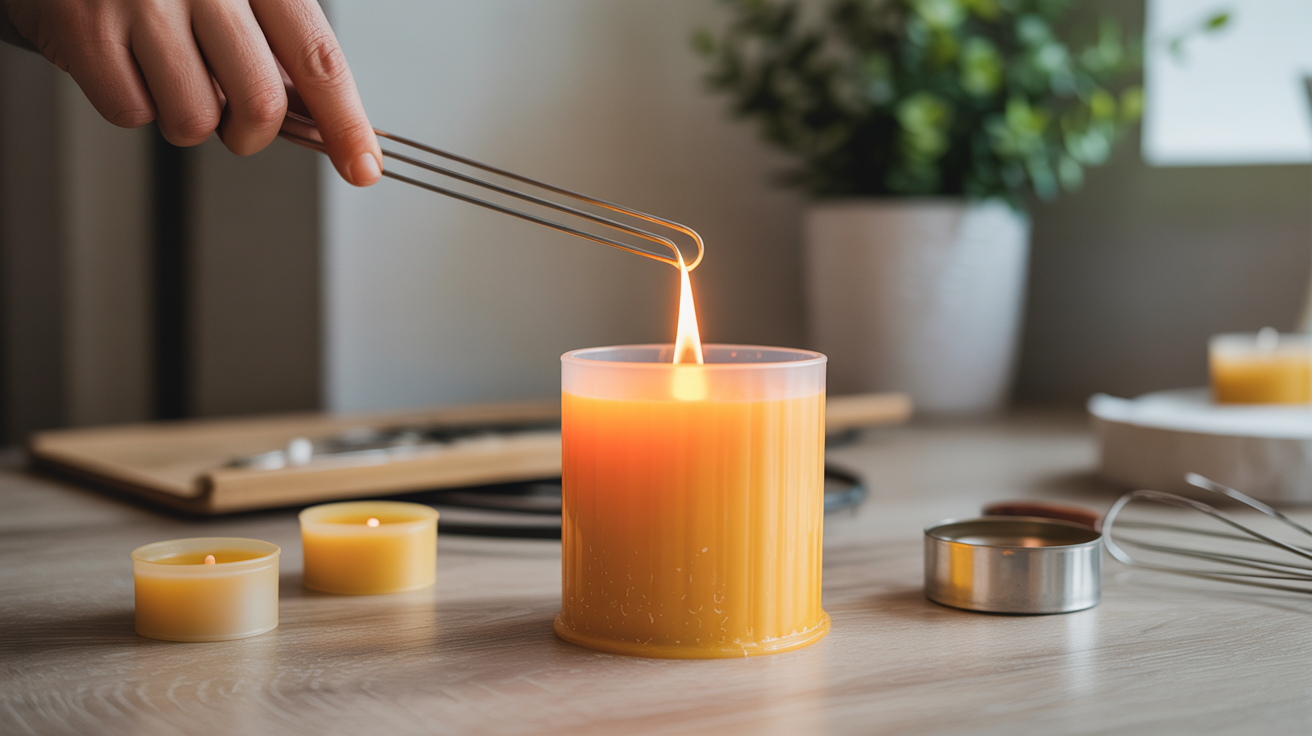
Wax is solid at room temperature, which makes it feel harmless. Once melted, though, it holds heat the way cooking oil does, and a spill on skin causes a burn faster than most people expect. It also has a flashpoint: the temperature at which wax vapors can ignite if an open flame or spark is nearby. That's a precise, standard concept, not a candle-specific one. Wikipedia's entry on flash point defines it as the lowest temperature at which a liquid gives off enough vapor to ignite momentarily in the presence of an ignition source, distinct from the "fire point," a higher temperature at which the vapor keeps burning on its own. Substances are generally classed as flammable below about 37.8°C (100°F) and combustible above it; candle wax, with a flashpoint north of 300°F, sits far into combustible territory, not flammable territory, which is part of why candle making is a safe hobby when you control your heat source.
For most container waxes (soy, coconut, paraffin blends), the melt range sits between 120°F and 145°F (49°C and 63°C). That's hot enough to burn skin on contact but well below the flashpoint, which for most candle waxes is above 300°F (149°C). The gap between "melting" and "flammable" is wide, which is why candle making is safe when you control your heat source. The danger zone is overheating: wax left on a burner without monitoring can climb well past its intended pour temperature and toward a range where vapors become a risk.
The rule is simple. Use a thermometer every time, never use direct high heat, and never leave melting wax unattended.
Setting Up a Safe Workspace
Where you work matters as much as how you work. A few minutes of setup before you turn on any heat prevents the scenarios that lead to burns or fires.
Surface and heat source. Melt wax in a dedicated pouring pitcher inside a double boiler or on a hot plate you can dial in precisely. Avoid thin-bottomed pots over a gas flame at high heat; it's too easy to overshoot your target temperature before you notice. Electric hot plates with a numbered dial give you repeatable control.
Keep a lid nearby. If wax in a pitcher ever catches fire (rare, but possible if it overheats significantly), a lid or fire blanket smothers it. Water does the opposite: pouring water on burning wax causes it to spray and spread the fire. Keep a metal lid or a damp fire blanket on the counter while you work, never a glass of water.
Protect your hands. Heat-resistant gloves or silicone oven mitts are worth having. A spill from a full pouring pitcher is a lot of hot liquid, and bare hands won't have time to react.
Work in a ventilated space. Fragrance oils release volatile compounds when heated. You don't need a workshop fan blowing at you, but an open window or a kitchen vent running keeps the air comfortable for long sessions.
Clear the area. Move paper towels, cardboard boxes, and anything flammable away from your heat source before you start. Wax drips and it tends to land on whatever is closest. The National Candle Association's safety guidance recommends keeping at least 12 inches of clearance between a burning candle and anything flammable; while that figure is written for finished, lit candles, it's a reasonable minimum to apply to your melting pot and pouring station too, since both involve open flame or high heat near fabric, paper, and fragrance oil.
If you're still putting together your kit, candle making supplies every beginner needs has a short, honest list of what to buy and what to skip.
Handling Fragrance Oils Safely
Fragrance oils come with two numbers worth knowing: the flashpoint and the recommended usage rate, usually expressed as a percentage of wax weight.
The flashpoint tells you how hot the oil gets before its vapors can ignite. Most candle-grade fragrance oils have flashpoints between 150°F and 200°F (66°C and 93°C). You add fragrance oil to wax that has cooled below that number, typically around 180°F (82°C) for paraffin and 135°F to 145°F (57°C to 63°C) for soy. Adding fragrance at or above its flashpoint doesn't automatically cause a fire, but the vapors become a hazard if there's an ignition source nearby. Keep a thermometer in the wax and add your fragrance when the temperature reads safe.
The usage rate matters for a different reason. Fragrance oils are concentrated, and using too much increases the chance of seepage, poor scent throw, and in some cases skin sensitization if someone handles the candle. Stick to the supplier's recommended rate, typically between 6% and 10% of wax weight, depending on the wax and the specific oil. When in doubt, start at the lower end and test.
Pouring, Cooling, and Burn Testing
The pour itself is where most burns happen, usually from rushing. Carry your pitcher with both hands, pour slowly into the center of the vessel, and place it on a flat, heat-resistant surface to cool undisturbed.
Don't move cooling candles for at least two hours. The wax is still soft and can shift the wick, and the jar or tin is still warm enough to burn if you pick it up bare-handed. This lines up with the general handling rule candle manufacturers publish for finished candles too: don't relocate a candle while any part of the wax remains liquid, since that's exactly when jostling causes sinkholes, off-center wicks, or a spill.
Before you gift or sell a single candle, do a proper burn test on a sample. Light it in a safe location, let it burn for two to four hours at a time, and check that the flame height stays below 1 inch (2.5 cm), the wick doesn't mushroom excessively, and the wax pool reaches the edges without tunneling. A candle that burns cleanly and safely at home is a candle you can feel good about sharing.
For a full overview of the process from setup to first pour, how to make candles at home: a complete beginner's guide walks through each step in order.
Quick-Reference: What to Do When Something Looks Off
Use this table during a pour session when you notice a problem and need to decide fast whether to keep going, pause, or stop entirely.
| What You Notice | Likely Cause | What to Do |
|---|---|---|
| Wax smoking lightly in the pot | Overheated past its intended melt range | Remove from heat immediately, let it cool, check with thermometer before continuing |
| Strong solvent-like smell from fragrance | Added above the oil's flashpoint | Let wax cool further next time; this batch is a quality issue, not a fire risk on its own |
| Small flame flickers up from the pitcher | Wax briefly ignited, usually from overheating near a flame | Slide a metal lid over the pot, turn off heat, step back; do not use water |
| Jar feels warm 30 minutes after pouring | Normal for this stage | Leave it alone; don't move or refrigerate it |
| Wax spilled on skin | Direct contact burn | Let it cool a few seconds, gently peel it away, run cool water over the area |
| Fragrance oil splashed in eyes | Irritant exposure | Flush with clean water for several minutes, check the oil's safety data sheet, seek care if irritation persists |
What to Do If Something Goes Wrong
Wax spill on skin. Do not wipe it off immediately; the reflex to wipe spreads the burn. Let the wax cool for a few seconds, then gently peel it away from the skin and run cool (not ice cold) water over the area. If the burn covers a large area or blisters, treat it as you would any burn and seek medical care.
Wax fire in a pitcher. Slide a metal lid over the top, turn off the heat source, and step back. Do not pour water on it, do not try to move the pitcher, and do not blow on it. Once the lid is on, the fire starves for oxygen and goes out on its own.
Fragrance oil splatter. Some fragrance oils irritate eyes and skin. If you get oil in your eyes, flush with clean water for several minutes. Check the oil's safety data sheet (SDS), which reputable suppliers provide, for specific first aid guidance.
A tidy, organized workspace reduces the chance of all three scenarios. If you're curious about what a basic setup costs before you commit, how much does it cost to start making candles breaks down a realistic starter budget.
Frequently Asked Questions
Is candle making dangerous for beginners? It carries real risks, mostly burns from hot wax and the possibility of wax fires if wax overheats. Both are avoidable with a thermometer, a controlled heat source, and a tidy workspace. Beginners who take ten minutes to set up properly and never leave the stove unattended find the process straightforward and safe.
What temperature is safe to pour candle wax? Pour temperatures vary by wax type. Soy wax is typically poured between 130°F and 145°F (54°C and 63°C). Paraffin container wax is often poured between 150°F and 165°F (66°C and 74°C). Follow your specific wax supplier's guidelines, as blends vary. Always use a thermometer and never guess.
Can I leave melting wax on the stove and walk away? No. Unattended wax on a heat source is the most common cause of overheating. Wax that climbs past its intended temperature can reach dangerous ranges quickly, especially on a high burner setting. Stay in the room while wax is melting.
What should I do if my candle jar cracks during pouring? Stop pouring immediately. Place the cracked jar on a heat-resistant surface away from anything flammable, let it cool completely, then dispose of the jar and the wax safely. A cracked vessel can release hot wax fast. Going forward, pre-warm your jars slightly, by setting them in a warm oven at 150°F (66°C) for a few minutes, before pouring to reduce thermal shock.
Do I need a fire extinguisher to make candles at home? A Class K or ABC fire extinguisher in the kitchen is a good idea for anyone who cooks with oil or makes candles, but it isn't specific to candle making. A metal lid that fits your pouring pitcher handles the most likely scenario (a small wax fire in the pot) more effectively than an extinguisher aimed at a small vessel. Keep the lid close, and you're prepared for the realistic risk.
How hot does a candle flame actually get, and does that affect how I should handle a burning candle? Hotter than most people assume. A candle flame has distinct temperature zones, and the yellow, light-emitting part of the flame reaches roughly 1200°C (about 2200°F), even though the wax pool feeding it stays well under 200°F. That gap is exactly why you keep burning candles away from anything that could catch from radiant heat or a draft-blown flame, not just from direct contact. It's also why you never test a "cooled" candle by touching the flame area itself, only the wax pool and jar.
Is it safe to make candles with kids in the house? Yes, with the same precautions any hot-stove activity requires. Keep the melting and pouring stage entirely off-limits to children, since that's where hot wax and open flame overlap. Once candles are fully cooled and cured, decorating cooled containers, labeling, or wrapping finished candles are reasonable tasks to involve older kids in under supervision.