Wicks & Fragrance
Candle Wick Types Explained: Cotton, Wood, and More
A plain-English guide to candle wick types — cotton, wood, hemp, and paper-cored — so you can match the right wick to your wax and get a clean burn.
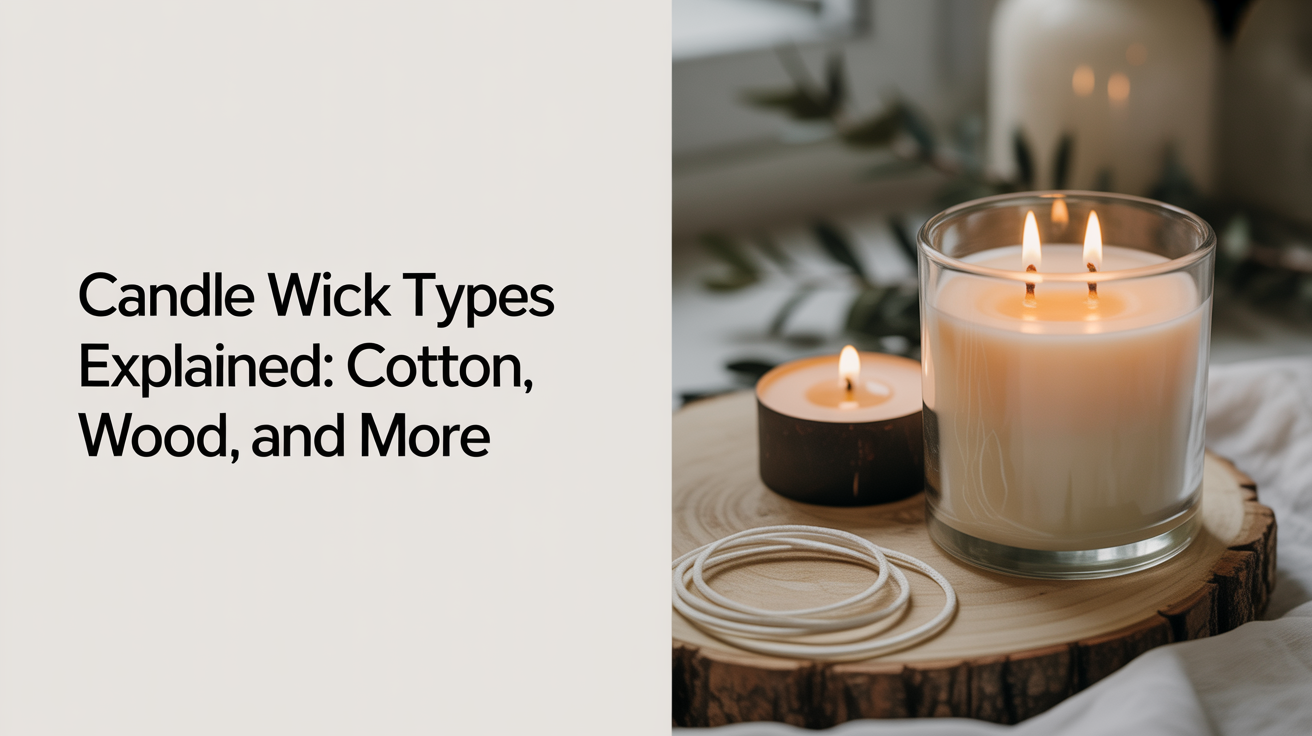
The wick is the smallest part of a candle and probably the most important. Get it wrong and you'll end up with tunneling, sooting, or a flame that drowns in its own wax pool. Get it right and the rest of the candle just works.
This guide covers the main candle wick types available to home crafters, what makes each one useful (and occasionally frustrating), and a quick table to help you match wicks to wax.
Cotton Wicks
Cotton is the beginner's default for good reason. It's affordable, widely available, and works across a huge range of wax types. Most cotton wicks are pre-tabbed, meaning the base is already crimped to a small metal sustainer, which saves you a fiddly step.
Flat or Braided Cotton Wicks
Flat braided wicks are the most common type you'll find in candle-making kits. The braid creates a slight curl as the wick burns, which self-trims the tip to some degree and reduces mushrooming (that black carbon ball that forms on an untrimmed wick). They burn consistently and suit most container candles made with paraffin or blended waxes.
The main downside is that they can still mushroom if you push the fragrance load too high or let a burn run too long. Always trim to about 1/4 inch (6 mm) before each new burn, this applies to every wick type, not just cotton.
Cored Cotton Wicks
Cored wicks have a center made from paper, zinc, or cotton cord that keeps the wick upright. That rigidity is helpful in soft waxes (like soy) that might let an uncored wick sag. Paper-cored wicks have largely replaced zinc-cored ones in modern candle making because they perform similarly without the controversy around heavy metals. (zinc is the safe alternative the CPSC allows after its 2003 lead-wick ban, but paper-cored is an easy substitute if you prefer it.)
Cored wicks are a reliable pick for votives, pillars, and jar candles using soy or coconut wax blends. Because they stay straight, they're also easier for beginners to center during the pour.
Wood Wicks
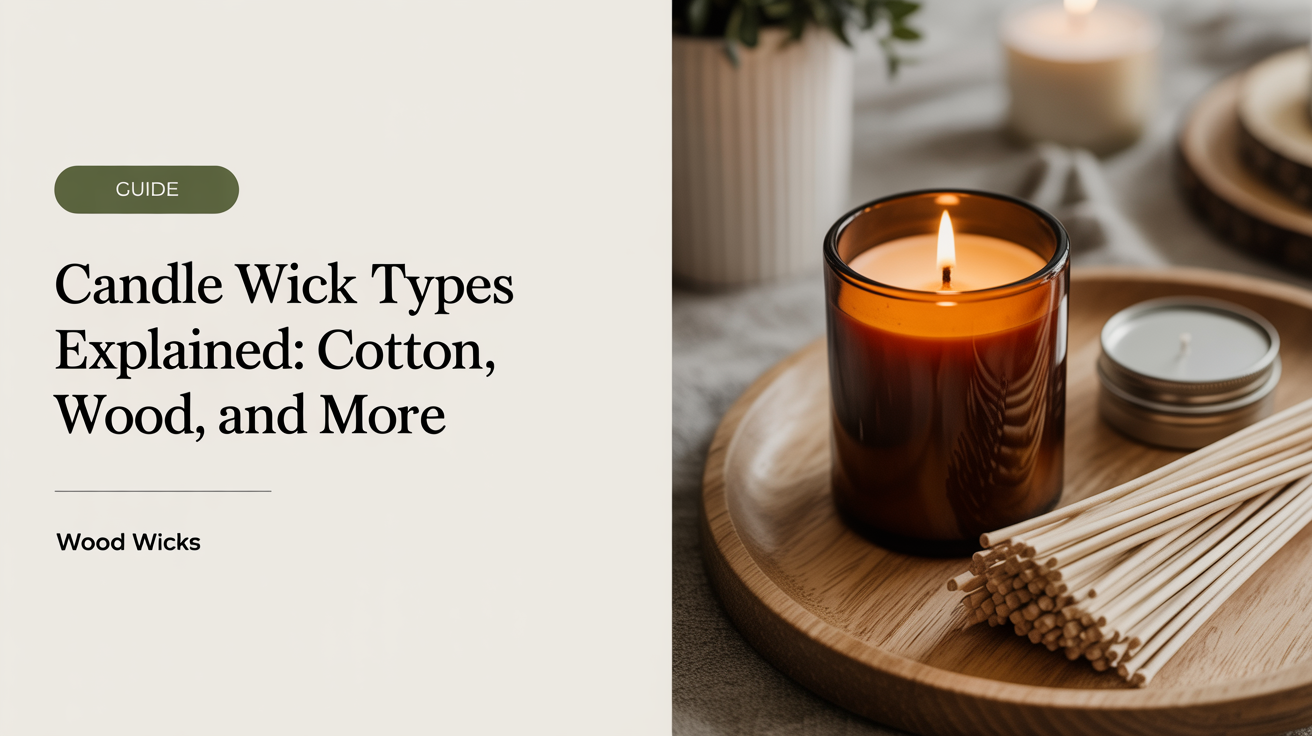
Wood wicks are the visual and acoustic upgrade in candle making. Light one and you get a soft crackling sound that resembles a small fireplace. For a lot of buyers, that's the whole point.
Single-Layer Wood Wicks
A single-layer wood wick is a thin strip of wood, often FSC-certified maple or cherry, that stands upright in the wax. It burns with a wide, low flame that creates a broad melt pool quickly. This is good for even scent throw but can be aggressive in smaller vessels. Sizing matters more with wood wicks than with cotton ones; too wide a wick for the diameter of your jar will overheat the glass and produce excess soot.
Wood wicks need to be trimmed just like cotton ones. Keep them at 1/8 to 3/16 inch (3–5 mm) above the wax surface. If you go too short, the wick won't light reliably; too long and the flame gets too tall and smokes.
Crackling (Booster) Wood Wicks
Some wood wicks are sold as two thin layers bonded together. The air gap between the layers produces a more pronounced crackle. These are sometimes called "crackling wicks" or "booster wicks." They behave like single wood wicks in terms of sizing and trimming, but the sound output is noticeably stronger.
Wood wicks pair best with softer waxes. Soy and coconut wax hold them well, but they can struggle to stay lit in harder paraffin unless you choose a formulation with a lower melt point. If your wood wick keeps going out after 10–15 minutes, the wax is likely too hard or the wick is slightly under-sized for the vessel.
One practical note: wood wicks absorb fragrance oil if left to soak before use. Pre-dipping them in your fragrance or melted wax can help with first-light performance.
Specialty Wicks
Beyond cotton and wood, a few other materials are worth knowing.
Hemp Wicks
Hemp wicks are made from natural hemp fiber and are often coated in beeswax. They burn slowly and cleanly, and they're popular among crafters who want a fully natural, petroleum-free candle. Hemp wicks work best in beeswax and natural wax blends; they can be trickier to size correctly in paraffin because the burn rate differs from what most wick charts assume.
Because hemp burns slower, you sometimes need to size up compared to a cotton wick recommendation for the same vessel. They're not the easiest starting point, but if natural materials are a priority for your brand or personal preference, they're worth experimenting with once you have the basics down.
Paper-Cored Wicks
These deserve a mention on their own rather than just as a sub-type of cotton. A paper-cored wick has a cotton braid wrapped around a paper core. The paper keeps the wick rigid and burns away cleanly without leaving residue. They work especially well in gel candles and soft container waxes where a floppy wick would be a problem.
If you're making votives or small containers and finding that flat cotton wicks keep leaning over before the wax sets, switching to a paper-cored wick is usually the quickest fix.
Matching Wick to Wax
The table below gives a general starting point. Every candle formulation is different, so these are guides rather than guarantees, always burn-test before committing to a batch.
| Wick Type | Best Wax | Pros | Cons |
|---|---|---|---|
| Flat/braided cotton | Paraffin, blended | Widely available, self-trims, beginner-friendly | Can mushroom at high fragrance loads |
| Cored cotton (paper) | Soy, coconut, soft blends | Stays upright, clean burn, no heavy metals | Slightly stiffer flame, needs correct sizing |
| Single wood wick | Soy, coconut | Wide melt pool, decorative look, soft crackle | Needs precise sizing, can struggle in hard paraffin |
| Crackling wood wick | Soy, coconut | Louder crackle, strong aesthetic appeal | More fragile, harder to source, sizing still critical |
| Hemp wick | Beeswax, natural wax | Fully natural, slow clean burn | Sizing less standardized, not ideal for paraffin |
| Paper-cored cotton | Gel, soft container wax | Rigid, clean, works in tricky soft waxes | Less common in stores, limited size range |
For a deeper look at choosing the right size within each type, see our guide on how to choose the right candle wick.
Fragrance Oil and Wick Performance
Wick choice doesn't happen in isolation. The amount of fragrance oil you add affects how the wick burns. A high fragrance load makes the melt pool more liquid, which can flood a wick that's slightly too thin or cause a cotton wick to mushroom faster. Adding too little fragrance can make a wood wick crackle more than it should and produce a hotter flame.
The interaction goes both ways: a correctly sized wick will have a cleaner burn even at higher fragrance percentages, while a mismatched wick will show problems at any load. Before you start adjusting fragrance, confirm the wick size is right for your vessel first.
For specifics on fragrance loads by wax type, see how much fragrance oil to add to candles and when to add fragrance oil to candle wax.
Frequently Asked Questions
What is the most common wick type for beginner candle makers?
Flat braided cotton wicks. They're sold in most candle-supply shops, work across paraffin and blended waxes, and are pre-tabbed so you don't need extra hardware to anchor them. They give you a reliable baseline to start burn-testing from.
Do wood wicks really crackle?
Yes, single and double-layer wood wicks produce a genuine crackling sound as they burn. The double-layer (booster) style is louder. The crackle comes from moisture and resins in the wood burning off as the flame heats the wick. It's a real acoustic effect, not a marketing claim.
How do I know if my wick is the right size?
After a full burn (let the candle burn until the melt pool reaches the edges of the container, usually 2–4 hours for a first burn), look at the wick. A mushroom or large carbon ball means it may be too large. A small, drowned flame surrounded by unmelted wax means it's too small. A clean, steady flame with a full melt pool that doesn't overflow is what you're aiming for.
Can I use a wood wick in paraffin wax?
You can, but it's harder. Paraffin with a higher melt point can cause wood wicks to extinguish before the wax fully liquefies. If you want to use wood wicks in paraffin, choose a container-grade paraffin with a lower melt point (around 125–130°F / 52–54°C) and size up from your initial guess.
How often should I trim my wick?
Before every burn. Trim cotton wicks to 1/4 inch (6 mm) and wood wicks to 1/8–3/16 inch (3–5 mm). A wick that's too long produces a larger, unsteady flame, more soot, and faster fuel consumption. Trimming takes five seconds and meaningfully extends the life and quality of your candle.