Wicks & Fragrance
When to Add Fragrance Oil to Candle Wax
When to add fragrance oil to candle wax, the right add temperatures for soy, paraffin, and coconut wax, and the beginner mistakes to avoid.
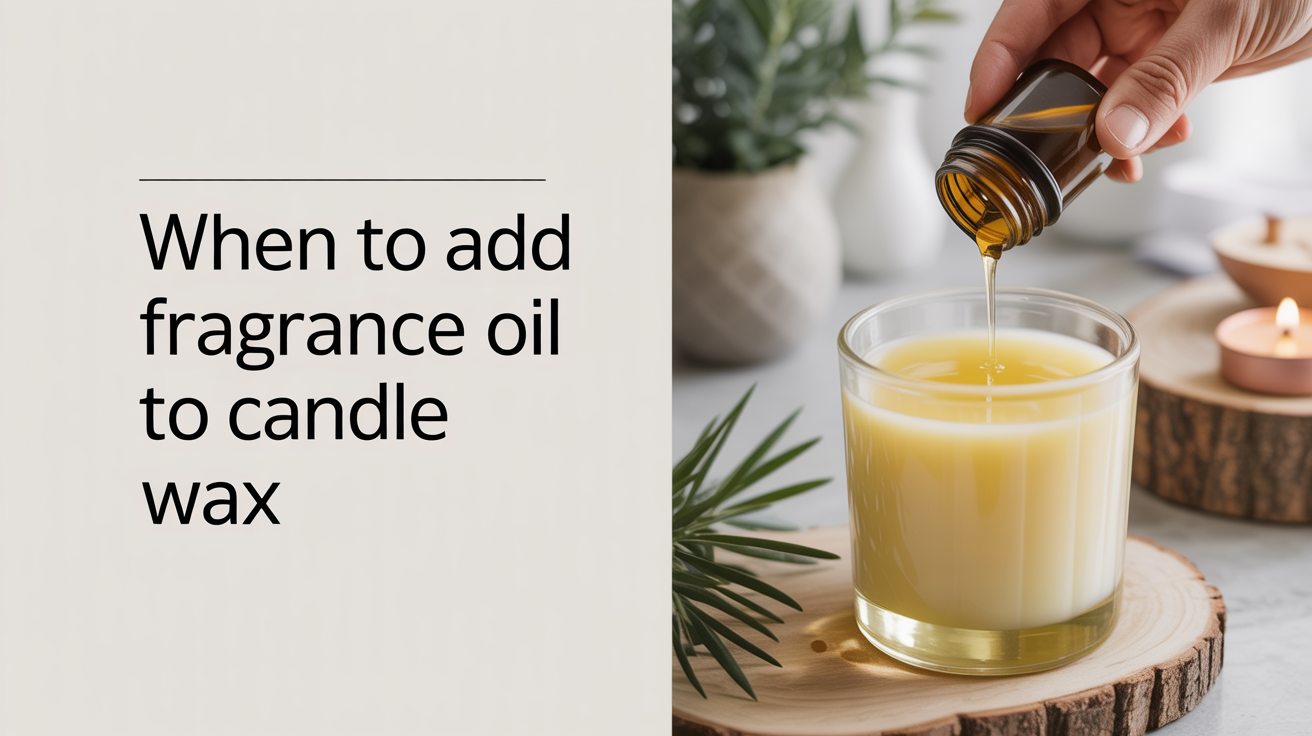
For soy wax, add your fragrance oil at around 185°F (85°C) and stir gently for about two minutes. That single guideline covers most beginner pours. The rest of this guide explains why that number matters, how it changes for other waxes, and what goes wrong when you ignore it.
Why the Add Temperature Actually Matters
Fragrance oil doesn't just float in wax. For the scent to stick, the oil needs to bind with the wax molecules. That happens most reliably in a specific temperature window. Too hot and the volatile scent compounds flash off before the wax sets. Too cool and the oil doesn't incorporate fully, which can cause separation, wet spots, or a weak cold throw.
There's also a safety concern. Every fragrance oil has a flashpoint, the temperature at which the oil can ignite if exposed to an open flame. You're not working with open flames, but adding fragrance above its flashpoint still accelerates scent loss and can create a greasy, uneven texture in the finished candle.
The takeaway: a thermometer isn't optional. Guessing by colour or viscosity doesn't cut it.
What the Flashpoint Means for Your Pour
A flashpoint of, say, 170°F means you should add that fragrance at or below 170°F. Most quality fragrance oils for candle making have flashpoints between 140°F and 200°F. Check the safety data sheet (SDS) for every oil you buy. Reputable suppliers include this information on the product page.
Adding at 185°F works for soy precisely because most soy-safe fragrance oils have flashpoints well above that mark. If you're using a fragrance with a lower flashpoint, drop your add temperature accordingly.
Recommended Add Temperatures by Wax Type
Different waxes have different melting points and molecular structures, so the ideal fragrance add temperature shifts depending on what you're using.
| Wax Type | Add Fragrance At |
|---|---|
| Soy (container) | 180–185°F (82–85°C) |
| Soy (pillar) | 180–185°F (82–85°C) |
| Paraffin | 165–185°F (74–85°C) |
| Coconut wax | 165–175°F (74–79°C) |
| Beeswax | 160–170°F (71–77°C) |
| Paraffin-soy blend | 170–185°F (77–85°C) |
These ranges are starting points, not guarantees. The wax manufacturer's data sheet is the authoritative source. Suppliers like CandleScience, Brambleberry, and NatureWax publish pour guides for each product they sell; use those over any generic advice including the table above.
A Note on Soy Wax Specifically
Soy wax is forgiving but finicky about fragrance binding. Adding at 185°F gives the oil enough time to fully incorporate before the wax starts to set (typically around 125–135°F). Adding much hotter than 190°F risks a slight loss of top notes; cooler than 175°F and you may see fragrance oil pooling at the bottom of the pour.
Choosing the right wick for your candle matters just as much as fragrance temperature, because even a perfectly scented candle won't throw well with a wick that's too small.
How to Add and Stir Fragrance Oil Correctly
Once your wax hits the target temperature, take it off the heat source. Continuing to heat while you add fragrance introduces temperature fluctuations that are hard to control.
- Measure your fragrance oil by weight, not volume. A kitchen scale accurate to 0.1g is the tool for this.
- Pour the oil slowly into the wax in a thin stream.
- Stir with a silicone spatula or stainless steel spoon using a slow, consistent motion for at least two minutes. Two minutes feels longer than you'd expect.
- Scrape the sides and bottom of the pouring pitcher to catch any un-incorporated oil.
- Let the wax rest for one to two minutes, then stir again briefly before pouring.
Two minutes of stirring isn't arbitrary. Fragrance oil and wax don't mix instantly the way sugar dissolves in hot water. The stirring physically distributes the oil and helps it emulsify into the wax matrix.
For guidance on how much fragrance to use before you start stirring, see how much fragrance oil to add to candles.
Pour Temperature vs. Add Temperature
These are two separate things, and beginners sometimes confuse them. The add temperature is when you put the fragrance into the wax. The pour temperature is when you pour the scented wax into the container, which is typically 10–30°F lower. For soy, that often means adding fragrance at 185°F and pouring at 140–160°F. Always check your wax supplier's recommendation.
Common Mistakes and How to Avoid Them
Adding Fragrance Too Hot
This is the most common beginner error. The reasoning is understandable: hotter wax is more liquid and seems like it should mix better. But above 190–200°F, volatile scent compounds begin to evaporate. You'll notice a strong smell while you're pouring, then be disappointed by a weak cold throw once the candle cures.
If you've overheated your wax by accident, don't add the fragrance yet. Let it cool to the right window, then add.
Adding Fragrance Too Cool
On the other end, adding fragrance to wax that's already cooling (below 170°F for soy) can prevent full incorporation. You may see oil separation in the finished candle, or notice fragrance pooling on the surface after it sets.
If your wax has cooled too much before you added fragrance, gently reheat to the target temperature. Don't rush this.
Skipping the Thermometer
A clip-on candy thermometer or infrared thermometer both work. An infrared gun is faster and easier to clean. Without one, you're guessing, and temperature swings of even 15–20°F can affect the finished candle.
Not Stirring Long Enough
Thirty seconds of stirring isn't enough. Two full minutes at a calm, steady pace is the minimum. Use a timer on your phone if needed.
Using a Fragrance Oil Not Rated for Candles
Not all fragrance oils are formulated for high-heat applications. Cosmetic or soap-grade fragrance oils may have lower flashpoints or additives that behave unpredictably in wax. Stick with oils specifically labeled as candle-safe, and always check the SDS.
Different wick materials also affect how fragrance releases once the candle is lit. Understanding candle wick types can help you get the most out of a well-scented pour.
Frequently Asked Questions
Can I add fragrance oil above its flashpoint?
Technically yes, but you'll lose scent strength. Above the flashpoint, volatile aromatic compounds evaporate instead of binding into the wax. The finished candle will smell weaker than it should. Always add at or below the fragrance's flashpoint, which you'll find on the supplier's SDS.
Does the add temperature change if I use more fragrance oil?
Not significantly. The ratio of fragrance to wax (your fragrance load) affects scent throw, but the ideal add temperature stays roughly the same. What changes at higher fragrance loads is the risk of the oil not binding fully, so accurate temperature control becomes more important, not less.
My candle smells strong while I'm making it but weak once it's set. What went wrong?
The most common cause is adding fragrance too hot, which burns off the scent before the wax sets. Other possibilities: insufficient cure time (soy candles need 48–72 hours minimum to fully cure and develop scent), too small a wick for the vessel diameter, or a fragrance load that's too low for the wax type.
Can I add fragrance oil to wax that's already in the jar?
No. You need to add fragrance to the liquid wax in your pouring pitcher while it's at the correct temperature, stir thoroughly, and then pour into the container. Adding oil to wax that's already set won't incorporate and can create a fire hazard.
Do soy and paraffin need the same add temperature?
Close, but not identical. Paraffin can handle a slightly broader range (165–185°F) because its molecular structure is more uniform. Soy benefits from consistency closer to 185°F to prevent fragrance separation. When blending the two, follow the paraffin-soy blend guideline from your supplier.