Wicks & Fragrance
How to Trim and Care for a Wood Wick Candle the Right Way
Learn how often to trim a wood wick, clear away char between burns, spot a healthy crackle, relight it properly, and know when a wick is too far gone.
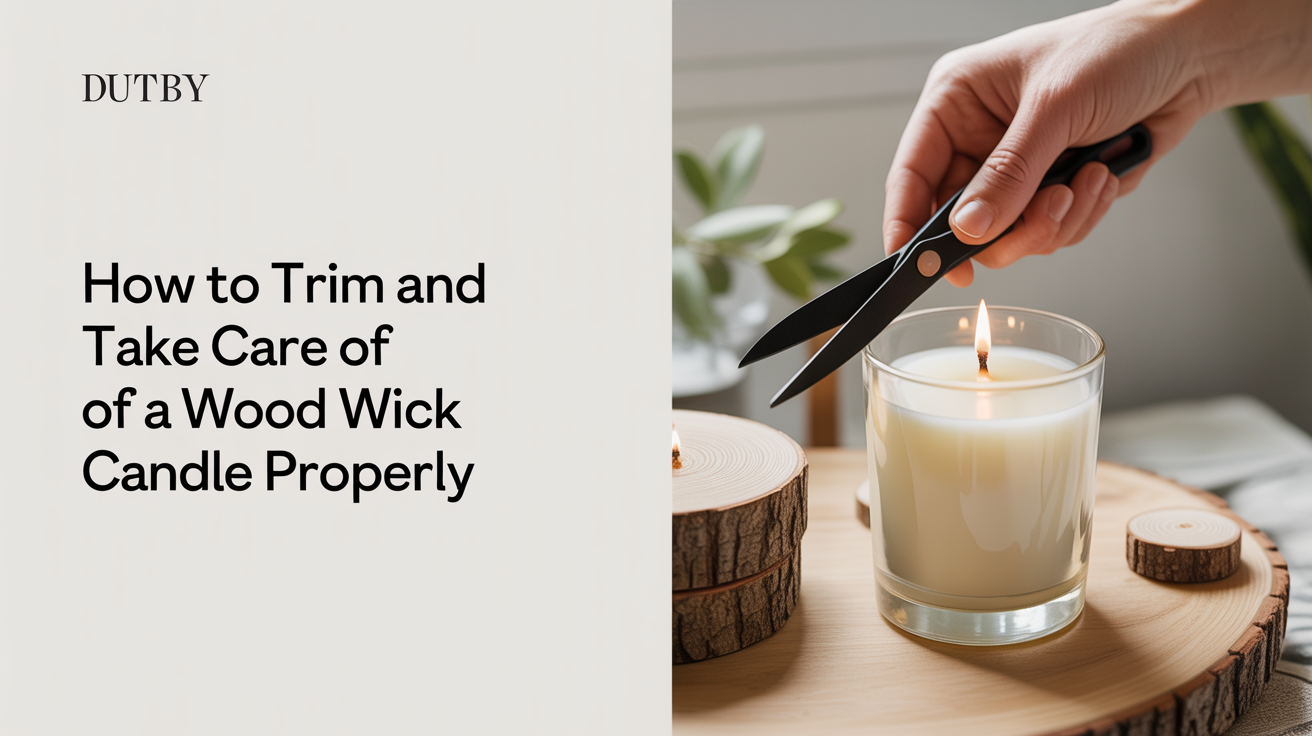
A wood wick candle rewards a little bit of upkeep more than almost any other style on the market. Get the wood wick trimming habit down and you get a clean, even flame with that gentle crackle every single burn. Skip it for even one or two lightings and you end up with a stubby, blackened stub that won't catch no matter how many matches you go through. The good news is that the whole routine takes about ten seconds and needs nothing more than your fingers or a pair of scissors.
Why Wood Wick Trimming Matters Before Every Burn
Cotton wicks curl over as they burn, which keeps most of the carbon buildup burning off on its own. Wood wicks don't curl the same way, so the charred tip just keeps building layer after layer every time you light the candle. That growing char does two things, and both are bad. First, it gets wide enough to choke the amount of oxygen reaching the flame, so the candle starts smoking, guttering, or throwing off a flame that leans hard to one side. Second, once the char gets thick enough, it stops holding a flame at all, and you're left striking match after match against a wick that just smolders and dies.
Trimming resets all of that. A short, clean wick draws wax evenly, burns with a steady flame, and produces that soft, low crackle that made you want a wood wick candle in the first place. If you haven't poured your own yet and want to see how the wick gets set and primed from scratch, our guide to making wood wick candles walks through the whole process.
How Short to Trim a Wood Wick
The standard target is about a quarter inch above the wax, roughly the thickness of two stacked coins. That's shorter than most people expect coming from cotton wicks, where an eighth of an inch of extra length barely matters. On a wood wick, an extra sixteenth of an inch can be the difference between a calm flame and one that's noticeably taller and smokier than it should be.
A few ways to get there:
- Fingers. Once the candle is fully cooled and the char is brittle, you can often just pinch and snap off the top layer of char with clean fingers. This works best on wicks that have only been burned once or twice.
- A wood wick trimmer tool. These look like a small flat-jawed clipper built specifically for the low, wide profile of a wood wick, and they're worth owning if you burn wood wick candles regularly. They trim close and level without you having to angle scissors down into a narrow jar.
- Nail clippers or small scissors. A basic nail clipper does the job fine for most jars. Small, sharp scissors work too, though in a narrow-necked jar they can be awkward to angle correctly.
Whatever tool you use, always trim cold. Trimming a warm or still-melted wick tends to leave the cut ragged instead of clean, and stray bits of char can fall into the wax pool and act as tiny secondary wicks the next time you burn.
Clearing Char Between Burns, Not Just Trimming
Trimming and char removal are related but not identical. Trimming shortens the wick. Clearing char is about knocking loose the flaky black debris that clings to the sides of the wick and sometimes ends up scattered across the wax surface after a burn. Left in place, that debris can relight independently in odd spots, which is part of why you'll occasionally see two or three tiny flames dancing around the base of a wood wick instead of one contained flame.
After the candle cools, brush or wipe the wick area with a dry cotton pad, a paper towel, or your fingers to remove any loose char and soot. If the wax around the wick looks gray or ashy, that's leftover soot, and it's fine to leave it since it won't affect the next burn much, but wiping it away keeps the jar looking nicer for gifting or selling. This clearing step is really the whole of wood wick candle care between lightings: trim short, wipe clean, relight.
For a broader comparison of how wood wicks behave against cotton and other wick materials, including why they need this different kind of attention, see our rundown of candle wick types.
What a Healthy Crackle Sounds and Looks Like
The crackle is the whole appeal of a wood wick, and it comes from tiny pockets of moisture and resin in the wood popping as they heat, similar in principle to a small fireplace. A healthy wick gives a soft, steady, almost rhythmic tick and crackle, paired with a flame that stays low, roughly a half inch tall, and doesn't flicker wildly or lean.
A struggling wick sounds and looks different. You might hear no crackle at all, just a quiet hiss, or you might see a flame that's tall, wavering, and trailing dark smoke. Visually, a healthy wick has a fairly even, light gray to black char line straight across the top. A struggling one often chars unevenly, thicker on one side than the other, because the wick isn't drawing wax at the same rate all the way across its width. If you notice this, put the flame out, let the candle cool, and trim before relighting rather than trying to burn through the problem.
Relighting a Wood Wick That Won't Catch
A wood wick that's freshly trimmed can still be stubborn to light the first time, mostly because the flame from a lighter or a straight-on match doesn't hold contact with enough of the wick's width. A few adjustments make a real difference:
- Angle the match or lighter. Instead of holding the flame straight down onto the wick tip, tilt it so the flame runs along the top edge of the wick, catching more surface area at once.
- Hold at the char line, not above it. The dark line across the top of the wick is where the wood is thinnest and most receptive to catching. Hold the flame right there rather than an inch above it.
- Give it a slow count of five to ten. Wood needs a bit longer than cotton to catch fully. Pulling the flame away too early is one of the most common reasons a wood wick seems like it "won't light" when it just needed a few more seconds of contact.
- Check the wax pool. If there's a deep puddle of unmelted wax pooled around the base, the wick may be sitting slightly below the surface, which behaves like a wick trying to light while damp. Tilting the jar slightly to let melted wax run off, or dabbing the area dry, can help.
If none of that works and the wick still won't hold a flame after several honest attempts, it's worth reading through our guide on a wick that's drowning or won't stay lit, since a wood wick that keeps failing to catch is often sitting in too much liquid wax rather than being damaged outright.
When a Wood Wick Is Too Damaged to Save
Not every wick recovers with a trim. A few signs it's time to stop trying:
- The wick has burned down so short that trimming would leave almost nothing above the wax line to hold a flame.
- The wick has been fully submerged in melted wax for an extended period, sometimes called drowning, and no longer sits proud of the surface even after you clear wax away from around it.
- The wood has visibly split or frayed down its length rather than just charring at the tip, which usually happens from repeated harsh trimming or a wick that burned too hot for too long.
- You've trimmed correctly, cleared the char, and tried relighting with patience three or four separate times with no result.
At that point, the honest move is to either re-wick the candle if you're comfortable doing that kind of repair, or treat the candle as a wax-melt candidate instead of a burn candle. It isn't a failure of technique so much as a wick that's simply used up.
Frequently Asked Questions
How often should I trim a wood wick?
Every single time, before each burn, once the candle has fully cooled from the last one. Skipping even one trim lets char build up enough to change how the next burn behaves.
Can I trim a wood wick while it's still warm?
It's better not to. Warm wax and a warm wick tend to produce a ragged cut, and stray char pieces are more likely to fall into the wax pool. Wait until the candle is fully cooled and solid.
Why does my wood wick crackle louder than usual?
A louder or more erratic crackle than normal usually points to a wick that's a bit too long, so trim it back to about a quarter inch and see if the sound settles into that softer, steadier tick.
Is it normal for a wood wick to smoke a little when I blow it out?
A brief puff of smoke right when you extinguish any candle, wood or cotton wick, is normal. What's not normal is smoke throughout the burn itself, which usually means the wick needs trimming or the flame is sitting too tall.
Do I need a special tool to trim a wood wick, or will scissors work?
Scissors or nail clippers work fine for most people. A dedicated wood wick trimmer tool just makes the job easier in narrow jars and gives a slightly cleaner, flatter cut across the whole width of the wick.