Getting Started
Melt-and-Pour vs. Making Candles From Scratch
Compare the two main beginner candle methods: melt-and-pour kits vs. making from scratch. Learn the real differences in ease, cost, and creative control.
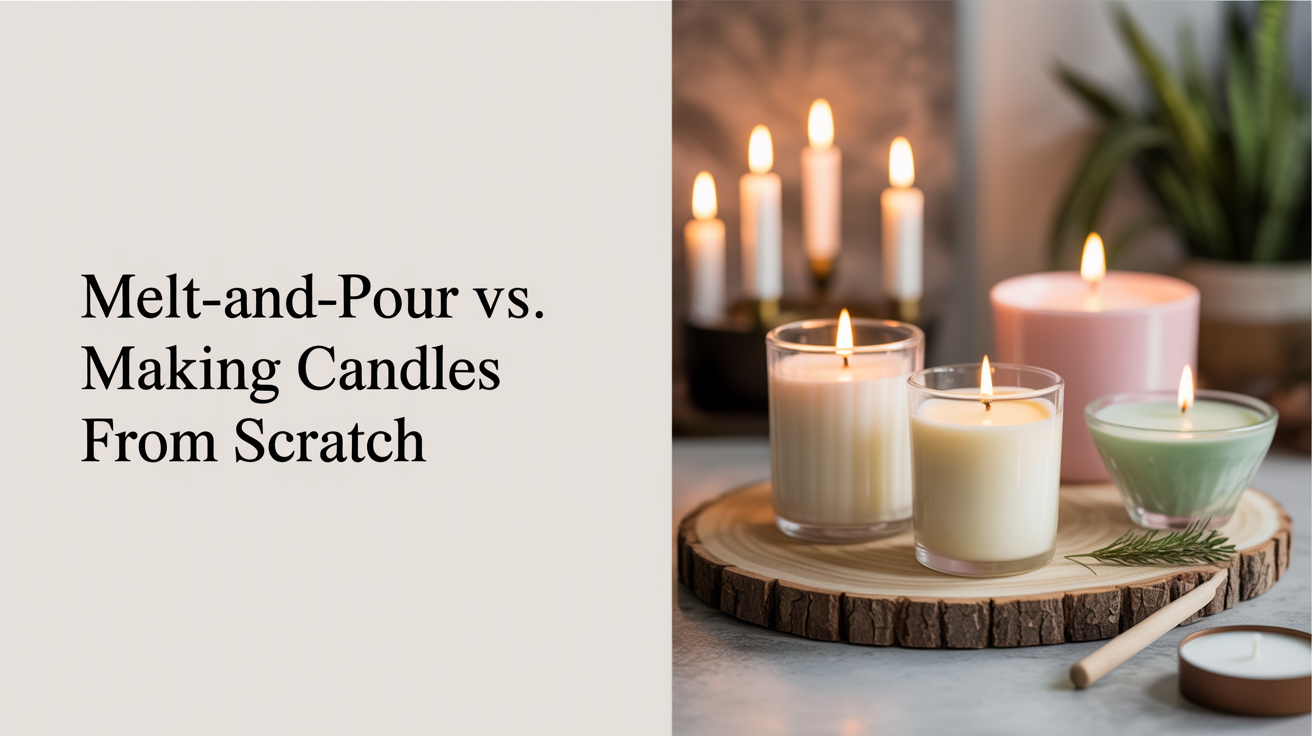
New to candle making and not sure which path to take? The short answer: start with melt-and-pour if you want quick wins with minimal gear, or jump straight into making from scratch if you want full creative control and don't mind a steeper first batch. Both are legitimate starting points. This guide breaks down what each method actually involves so you can pick the one that fits your situation.
One quick note on terminology: "melt-and-pour" in candle making means working with pre-formulated wax blends (often sold as kits with everything included). This is different from soap making, where "melt-and-pour" is a common phrase for a similar concept. Here, we're comparing beginner candle kits to the full DIY process of sourcing your own wax, wicks, and fragrance.
What Melt-and-Pour Candle Kits Actually Are
Melt-and-pour candle kits come with pre-blended wax, pre-tabbed wicks, and fragrance oils already measured out. You melt the wax in a pouring pitcher (usually microwave-safe), add fragrance, drop in the wick, and pour into a container. That's most of it.
The wax in these kits is typically a blended soy or paraffin mix that's been optimized at the factory for scent throw and clean burning. You don't need to troubleshoot fragrance load percentages or wick sizing, because those decisions have already been made for you.
What You Still Control
Even with a kit, you're not just pressing a button. You still:
- Choose your containers (the kit usually includes some, but you can use your own)
- Decide how long to let it cure before burning
- Time your pour temperature (most kits give a target range)
- Pick the scent, if the kit offers options
Where Kits Fall Short
The main limitation is that you can't customize much beyond what the kit offers. If you want a specific wax type, a particular wick brand, or a custom fragrance blend, a kit won't get you there. And over time, kits cost more per candle than buying materials in bulk.
Making Candles From Scratch
From-scratch candle making means sourcing each component separately: container wax (soy, paraffin, coconut, or a blend), pre-tabbed wicks in the right size for your vessel, fragrance or essential oils, and whatever containers you choose.
You control every variable. That's the appeal, and also the challenge.
The Learning Curve Is Real
Temperature matters more when you're working from scratch. Most soy waxes need fragrance added at a specific temperature range (usually 170-185°F) to bind properly. Pour too hot and the wax can sink or crack; pour too cool and the fragrance doesn't incorporate evenly. A good thermometer is not optional.
Wick selection is the other big variable. The wrong wick for your container diameter and wax type creates mushrooming, tunneling, or a flame that won't stay lit. Getting the right supplies from the start makes this much less painful, but expect to do some testing.
The Payoff
Once you've dialed in a combination that works, you can reproduce it exactly, scale up affordably, and tweak it endlessly. Want more clove and less orange in your fall scent? Done. Want to switch from soy to a coconut-paraffin blend? You can do that without buying a whole new kit. This is why most serious hobbyists end up here eventually.
Side-by-Side Comparison
| Factor | Melt-and-Pour Kit | From Scratch |
|---|---|---|
| Setup time | 20-30 minutes first pour | 1-2 hours to learn the process |
| Equipment needed | Usually included in kit | Thermometer, pitcher, scale, supplies sourced separately |
| Temperature precision | Low (wide pour window) | Higher (fragrance bind window matters) |
| Wick selection | Pre-chosen for you | You test and choose |
| Cost per candle | Higher (kit markup) | Lower once you buy in bulk |
| Scent customization | Limited to kit options | Unlimited |
| Wax choice | Fixed by kit | Soy, paraffin, coconut, beeswax, blends |
| Failure risk for first batch | Low | Moderate (sinkhole, poor scent throw, tunneling) |
| Scalability | Expensive to scale | Cost-efficient at volume |
| Creative ceiling | Lower | High |
Which Method Should You Start With?
If you've never made a candle before and want to see a finished result quickly, a kit removes the variables that trip up first batches. You'll still learn the basics (melting, pouring, wick handling), and you'll get a candle that actually works. The complete beginner's guide to making candles at home walks through both approaches in more detail.
If you're already comfortable in the kitchen, fine with using a thermometer and scale, and want to get straight to the method you'll stick with long-term, starting from scratch is reasonable. The cost of a first failed batch is low. Most problems, like sinkholes or poor scent throw, are fixable with small adjustments.
The Budget Consideration
Kits look cheaper upfront but cost more over time. A single 6-candle kit might run $25-40. Buying the same weight in soy wax, a pack of wicks, and a fragrance oil separately might cost $35-50 but yields 10-15 candles. A full breakdown of candle-making startup costs shows where the money actually goes in each scenario.
For most beginners, the honest recommendation is: one kit batch to understand the process, then a transition to from-scratch. The kit gives you a reference point for what a well-made candle should look and perform like. After that, you're better equipped to troubleshoot your own batches.
Frequently Asked Questions
Is melt-and-pour the same as making candles from scratch?
No. Melt-and-pour kits use pre-formulated wax blends with components already chosen for you, which reduces variables. Making from scratch means you select and source your own wax, wicks, fragrance, and containers, giving you more control but requiring more knowledge upfront.
Can I add my own fragrance to a melt-and-pour kit?
Some kits allow this, but you should be cautious. Pre-blended kit waxes have a maximum fragrance load already factored in. Adding more fragrance on top of what's included can cause the wax to sweat, the scent not to bind, or the candle to burn poorly. Stick to the kit instructions unless you know the wax's fragrance load capacity.
Which method makes candles that smell stronger?
From-scratch candles can achieve stronger scent throw because you control the fragrance percentage. Most container waxes can hold 6-10% fragrance by weight. Kits are often formulated conservatively, so the scent throw is good but not maxed out. If a very strong throw is your goal, from-scratch gives you more room to work with.
Do I need a double boiler for either method?
For kits, often not. Many come with microwave-safe pouring pitchers. For from-scratch work, a double boiler or a dedicated melting pot over low heat is the standard approach, since direct heat can scorch wax and degrade fragrance. A dedicated pitcher on a kitchen scale and a clip-on thermometer handle most setups.
How long before I can burn a candle I made?
Both methods require a cure time. The general guideline is 24-48 hours minimum, though soy wax benefits from a full 1-2 week cure for best scent throw. Kit instructions usually specify a minimum wait. Don't rush this. A candle burned too soon will often smell weaker than it would after a proper cure.