Troubleshooting
Why Did My Candle Sweat or Leak Oil?
Candle sweating is fragrance oil separating from the wax. Learn what causes it, how to fix it, and how to prevent it in your next pour.
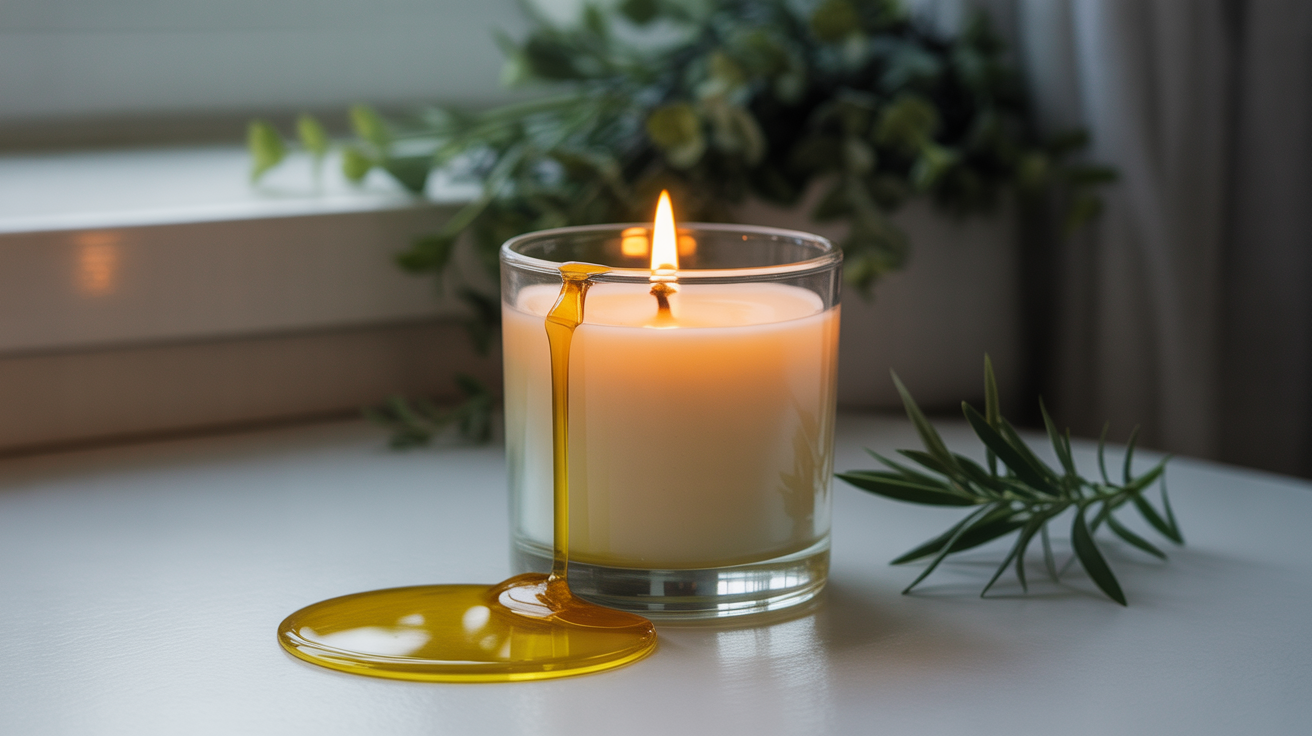
You pull your candle out of its curing spot and notice a greasy film on the top, or tiny droplets pooled along the inside edge of the jar. The candle looks like it is perspiring. This is called candle sweating, and it happens when fragrance oil that did not fully bind to the wax during the pour works its way back to the surface over time.
The good news is that a sweating candle is safe to burn. It is not ruined. Understanding why the oil migrated will help you prevent it on the next batch and, in many cases, fix the candles you already have.
What Causes Candle Sweating?
Sweat forms when fragrance oil separates from the wax matrix after the candle has set. There are several common reasons this happens.
Too much fragrance oil. Every wax has a maximum fragrance load it can hold, expressed as a percentage of the wax weight. Soy waxes typically bind up to 6 to 10 percent by weight. Coconut wax and paraffin can often take a bit more. When you add more fragrance than the wax can absorb, the excess has nowhere to go and eventually seeps out. If you are already wondering about scent performance, take a look at our guide on why your candle has a weak scent throw before simply adding more oil.
Fragrance added at the wrong temperature. Fragrance oil bonds to wax best when both are close in temperature at the moment they mix. If the wax is too cool when you stir in the fragrance, the oil does not disperse evenly. If it is too hot, some lighter fragrance compounds can start to off-gas before they even have a chance to bind.
Temperature swings during cure. A candle sitting near a window, a heat vent, or in a room that gets cold at night can develop sweat as the wax expands and contracts repeatedly.
The fragrance oil itself. Some fragrance blends, especially those with a high concentration of certain floral or citrus molecules, are harder for soy wax to hold onto. Fragrance oils with a lower flashpoint or a thinner viscosity tend to migrate more easily.
How to Tell Sweating from Other Issues
Sweating looks like an oily sheen or small droplets on the top surface or the inner glass wall. It may smell strongly of the fragrance oil in its raw state rather than as part of the finished burn.
This is different from frosting, which shows up as a white, powdery, chalky coating on natural waxes and is a cosmetic reaction between soy wax and the air. If your candle has that chalky white film rather than an oily film, the problem is something else entirely. Our article on what candle frosting is and how to prevent it covers that in detail.
Sweating is also not the same as tunneling, where the wick burns straight down the center and leaves a wall of wax untouched. Tunneling is about wick sizing and first burn length, not fragrance load. You can read more about that problem in our guide to why your candle is tunneling and how to fix it.
How to Fix a Sweating Candle
If the sweat is still liquid, you can blot it gently with a paper towel before it soaks back in or drips. Then leave the candle somewhere with a stable, moderate temperature, around 65 to 75 degrees Fahrenheit (18 to 24 degrees Celsius), away from sunlight and drafts.
For candles that are only mildly sweating, sometimes the oil reabsorbs on its own once the candle stabilizes. Give it a few extra days of cure time.
If the surface is heavily pooled with oil, you have a few options. You can remelt the candle, stir thoroughly, and repour. If you go this route, check your fragrance percentage first and reduce it if it was above the wax manufacturer's recommended load. Do not add any more fragrance when remelting; what is already in the wax is enough.
You can also simply burn the candle. The heat from the first burn will reincorporate the surface oil into the melt pool. The performance of the candle once lit is usually unaffected.
How to Prevent Sweating in Future Batches
Preventing sweat comes down to three things: fragrance load, temperature discipline, and storage.
Stay within your wax's recommended fragrance load. Check the data sheet from your wax supplier. For most soy container waxes, a safe starting point is 6 percent fragrance by weight, meaning 6 grams of fragrance oil per 100 grams of wax. You can test up to 8 or 10 percent if the supplier allows it, but go in small increments and do a test pour first.
Add fragrance at the right temperature. For most soy waxes, this is between 170 and 185 degrees Fahrenheit (77 to 85 degrees Celsius). Your supplier's guidelines take priority, but this range is a reliable starting point for most container soy blends. Stir for at least 2 minutes after adding the fragrance so it disperses fully before you pour.
Pour at the correct temperature. Soy container waxes generally pour best between 130 and 160 degrees Fahrenheit (54 to 71 degrees Celsius). Pouring too hot or too cool can affect how the wax solidifies around the fragrance.
Store finished candles in a stable environment. Keep curing candles away from windows, heating vents, and air conditioning drafts. Room temperature between 65 and 72 degrees Fahrenheit (18 to 22 degrees Celsius) is ideal.
Test fragrance oils before a full batch. Some fragrance blends are harder to bind in soy wax than others. A single test candle poured, cured for 48 hours, and observed tells you a lot before you commit to a full run.
Frequently Asked Questions
Is a sweating candle safe to burn? Yes. Oil on the surface of a candle does not make it unsafe. The fragrance oil has the same flashpoint it did when you added it. Blot the surface if there is a lot of pooling, then burn it as you normally would.
Will sweating go away on its own? Sometimes. If the fragrance load is close to the maximum and the candle is in a stable temperature, the oil can reabsorb during the rest of the cure period. If the load was significantly over the wax's capacity, the sweat will likely persist.
Does soy wax sweat more than paraffin? Soy wax has a lower maximum fragrance load than paraffin for most formulations, so it is more prone to sweating if fragrance percentages are pushed. This does not mean soy candles always sweat, just that the margin for error is smaller.
Can I add more wax to fix an overfragranced candle? You can remelt and add a bit more wax to dilute the fragrance load, but you need to recalculate the new ratio carefully to make sure you are still within the wax's recommended range. Remelting also gives you a chance to repour into a fresh vessel or top off sinkholes.
What fragrance percentage should I start with? For most soy container waxes, start at 6 percent by weight and evaluate your test burns before going higher. Some fragrance oils perform beautifully at 6 percent; others may need a small increase to achieve good scent throw. Your supplier's recommended load ceiling is the hard upper limit, not a target.