Troubleshooting
Why Is My Candle Smoking or Sooting?
Find out why your candle is smoking or leaving black soot on the jar, and learn simple fixes to get a clean, even burn every time.
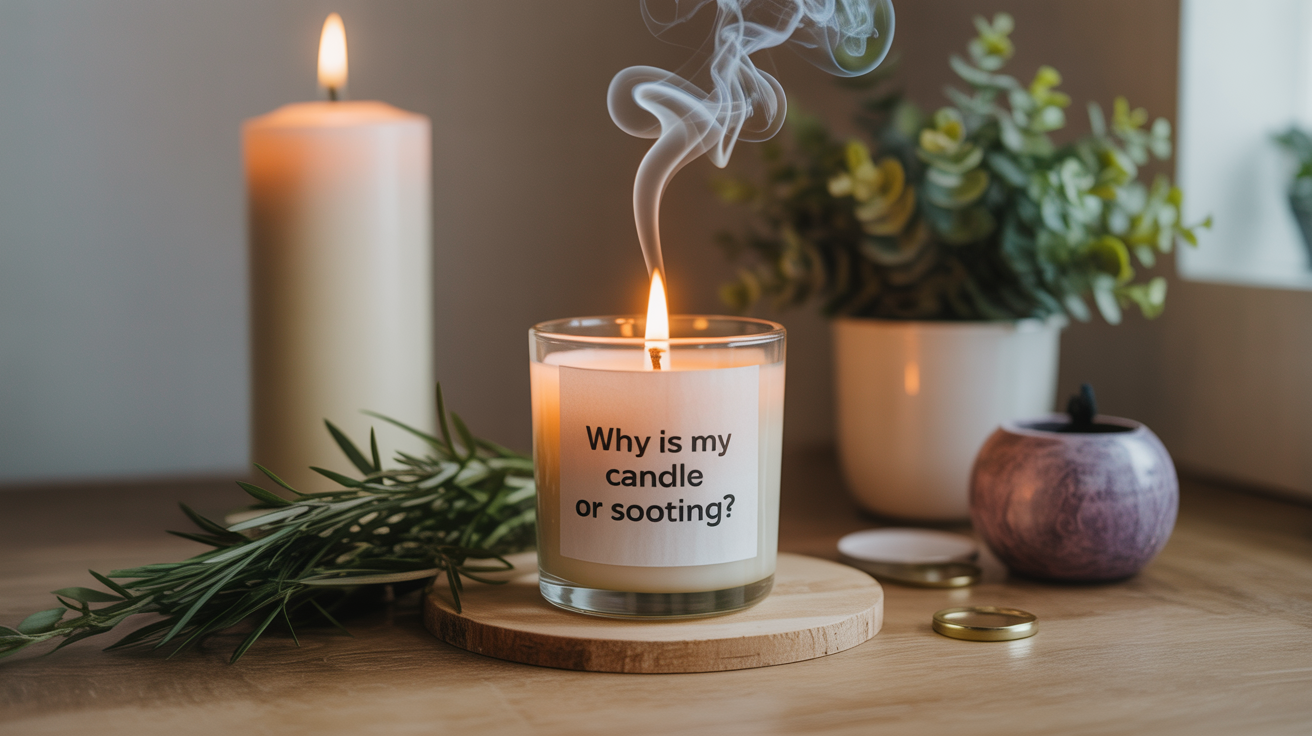
You lit your candle, settled in, and then noticed a thin ribbon of black smoke curling toward the ceiling or a dark ring of soot building up inside the jar. It is frustrating, especially after the effort that goes into pouring a good candle. The good news is that candle smoking almost always has a straightforward cause, and most fixes take less than a minute to apply.
This guide walks through why candles produce soot, which factors matter most, and what to do about each one so your next burn is clean.
Why Candles Produce Black Smoke
A candle flame works by drawing liquid wax up the wick through capillary action and vaporizing it as fuel. When the combustion is complete and balanced, very little visible smoke comes off the flame. The dark soot you see is unburned carbon particles, a sign that more fuel is reaching the flame than can be fully combusted.
Several things can push a flame out of that balanced state: a wick that is too long, air currents that disrupt the flame, fragrance oil that burns differently from plain wax, or debris sitting in the melt pool. Understanding which factor is at play in your candle makes the fix much easier to choose.
The Most Common Cause: Wick Length
If you ask any experienced candle maker what causes nine out of ten smoking candles, the answer is the same: a wick that has not been trimmed. As a wick burns, the tip builds up a carbon deposit called a mushroom. That mushroom draws more wax than the flame can burn, which leads to black smoke, a large flickering flame, and a sooty jar.
The standard trim is to cut the wick to about 1/4 inch (6 mm) before every single burn, including the very first one. Do this after the wax has fully solidified and cooled, never while the wax is liquid. A small pair of wick trimmers works best; nail scissors or even a paper towel can do the job if you pinch away the mushroom carefully.
If you trim and the candle still smokes within the first few minutes of burning, check whether the mushroom reformed quickly. That can mean the wick is a size too large for the vessel, which is a different problem covered below.
Other Causes of Candle Smoking
Air currents. A candle flame is sensitive to movement. Even a nearby ceiling fan on its lowest setting or a slightly open window can make a flame flicker, stretch, and smoke. Move the candle away from vents and drafts, or reduce airflow in the room before lighting. A steady, upright flame with a small teardrop shape burns cleanest.
Wick size is too large for the vessel. If you poured your own candle and chose a wick that is too wide or too thick for the container's diameter, the melt pool will be too hot and the flame too large. The candle will consume wax faster than it burns cleanly, resulting in persistent smoking that trimming alone will not solve. The fix for homemade candles is to test a smaller wick size in your next batch. For a finished candle you cannot rewick, burning it in shorter sessions (two to three hours at a time) and trimming carefully can reduce the problem.
Too much fragrance oil. Fragrance oil does not burn the same way wax does. Most waxes have a fragrance load limit, typically between 6% and 12% by weight depending on the wax type. When you add more fragrance oil than the wax can hold, the excess sits in the melt pool and creates extra fuel that the flame cannot handle cleanly. Always weigh your fragrance oil on a scale and stay within the manufacturer's recommended load for your specific wax.
Fragrance oil with a low flash point. The flash point of a fragrance oil is the temperature at which its vapors can ignite. Oils with a flash point below 170°F (77°C) can cause a candle to smoke more readily because the volatile compounds burn off unpredictably. Most reputable fragrance suppliers list the flash point on the product page. Stick to oils with a flash point of 170°F (77°C) or above for container candles.
Debris in the melt pool. Wick trimmings, dust, or bits of dried wax that fall back into the pool can act as secondary fuel sources and cause sputtering or black smoke. Before each burn, inspect the surface of the candle. Remove any visible debris with a dry paper towel or a toothpick before lighting.
Burning duration. Candles should not burn longer than four hours at a stretch. Past that point the wick becomes too long from new carbon buildup, the jar overheats, and the melt pool can become too deep, leading to increased smoking. Extinguish the candle, let it cool completely to room temperature before relighting, and trim the wick every time.
How to Reduce Soot Buildup on the Jar
Even a well-maintained candle can leave a faint black ring inside a glass jar over many burns. To clean it, wait until the wax is completely cool and solid, then wipe the interior glass with a cotton ball or soft cloth dampened with a small amount of rubbing alcohol. Avoid water, which can make the residue smear.
For prevention, keeping the wick trimmed and the burn time under four hours does the most work. A snuffer (a small bell-shaped cap on a handle) is gentler than blowing out a candle. Blowing creates a puff of air that can send melted wax and soot spray onto the jar walls. A snuffer cuts the oxygen to the flame cleanly without the blast of air.
If your candle has other burn problems alongside the smoking, it is worth reading about related issues. A wick that is too small can cause the flame to self-extinguish and the wax to tunnel down the center rather than burning evenly. Some waxes also develop a white, powdery coating called frosting, which is unrelated to smoking but worth understanding. And if your candle smells faint when burning, the cause may be fragrance load or scent throw rather than the wick; see our guide on why your candle has a weak scent throw for that.
Frequently Asked Questions
Is candle soot harmful to breathe?
Occasional exposure to candle soot in a well-ventilated room is generally considered low risk, but prolonged exposure in a small, closed space is not ideal. If a candle is consistently producing heavy black smoke, address the cause rather than burning it as-is. Good ventilation and a properly maintained wick keep soot minimal.
Why does my candle only smoke when I blow it out?
A small puff of smoke after extinguishing is normal because the wick continues to smolder briefly. The smoke should stop within a few seconds. If it lingers or produces a thick cloud, the wick may be too long or still has a carbon mushroom at the tip. Trimming before the next burn will help. Using a snuffer instead of blowing also reduces the post-extinguish smoke significantly.
Can the type of wax affect how much a candle smokes?
Yes, though the difference is modest compared to wick length. Soy wax and coconut wax tend to produce slightly less soot than paraffin when all other variables are equal, but a paraffin candle with a properly trimmed wick in still air will burn cleanly too. Wick maintenance matters far more than wax type when it comes to everyday smoking.
My candle smoked heavily the very first time I lit it. What went wrong?
The most likely cause is that the wick was never trimmed before the first burn. Many candles ship with a wick that is 1/2 inch (12 mm) or longer; that is too long. Always trim to 1/4 inch (6 mm) before lighting, even if the candle is brand new. If you also added too much fragrance oil during the pour, that can compound the issue on the first burn.
How do I know if my wick is the right size?
A correctly sized wick produces a melt pool that reaches the edge of the container within two to three hours, maintains a flame roughly 1/2 to 1 inch (12 to 25 mm) tall, and leaves little to no mushroom after extinguishing. Significant mushrooming, a flame taller than 1 inch, or heavy soot all point to a wick that is too large for that vessel.