Troubleshooting
Why Won't My Candle Wax and Container Stick Together?
Candle wet spots and wax pulling away from glass are common adhesion problems. Learn what causes them and how to prevent them for cleaner-looking candles.
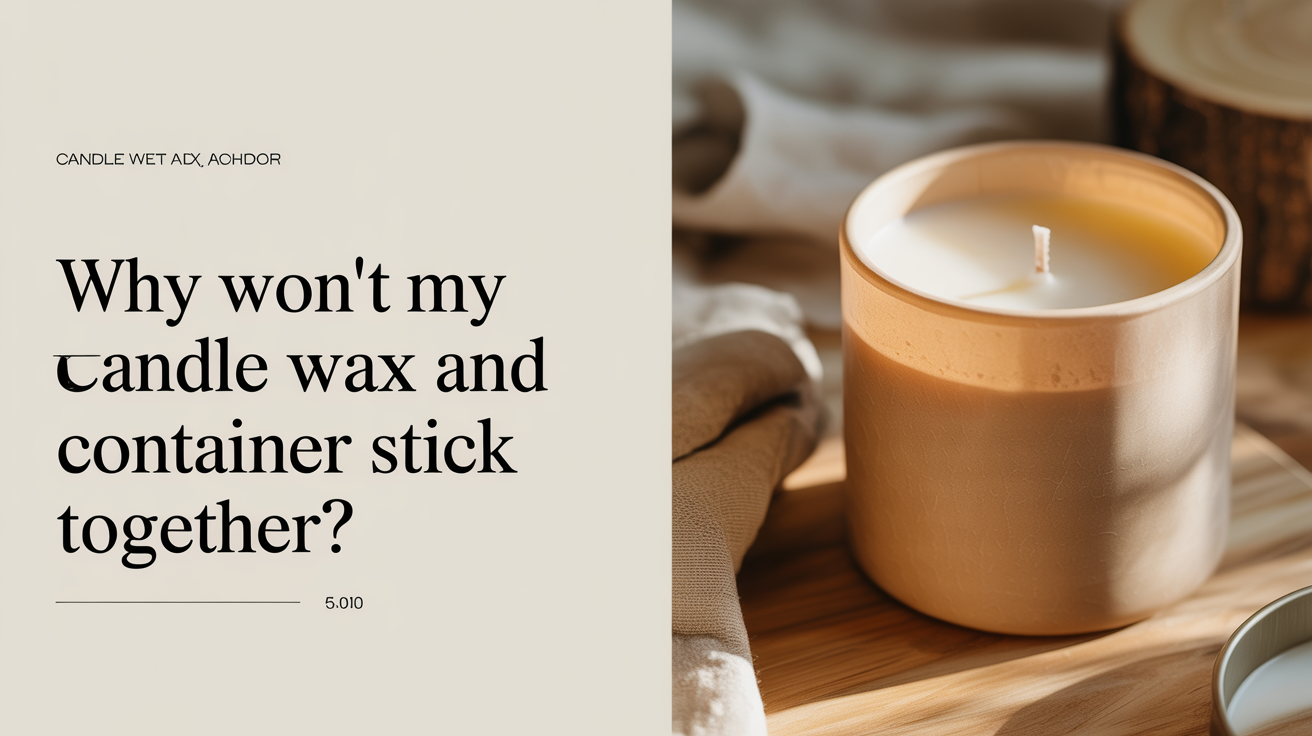
You poured what looked like a perfect candle, waited patiently for it to cool, and then lifted it up to find cloudy patches where the wax has separated from the glass. Those ghostly gaps between the wax and the jar wall are called wet spots, and they are one of the most common cosmetic complaints in container candle making. The frustrating part is that the candle usually burns just fine, but the appearance can look like something went wrong, which matters a lot if you are making candles to give as gifts.
The good news is that wet spots and adhesion problems are almost always fixable once you understand what is actually happening inside the jar as the wax cools.
What Wet Spots Actually Are
Despite the name, wet spots have nothing to do with moisture. What you are seeing is a small air gap between the solid wax and the glass wall of the container. Wax shrinks as it transitions from liquid to solid, and if any part of the wax pulls away from the glass during that process, light passes through the gap differently and creates the appearance of a watery patch.
Soy wax is particularly prone to this because it has a lower density than paraffin and contracts more as it solidifies. Coconut wax blends can also show adhesion gaps, though often less than straight soy. Paraffin is generally the most forgiving wax for adhesion, partly because it tends to cool more evenly and sticks to glass more reliably.
It helps to know that wet spots are not a structural problem. The candle will burn normally, and the gaps typically close a little once the candle has been through its first burn. If appearance matters to you, though, the techniques below will make a visible difference.
Why Pouring Temperature Changes Everything
The single biggest factor in candle adhesion is the temperature at which you pour the wax into the container. If the wax is too hot when it goes in, the outer layer that contacts the glass cools quickly while the center stays liquid much longer. As the center eventually shrinks and pulls inward, it can drag the outer skin with it and break the bond to the glass.
If the wax is too cool when you pour, it may already be beginning to solidify before it reaches the walls, which also prevents a good bond.
For most container soy waxes, a pour temperature between 120°F and 135°F (49°C and 57°C) gives a reasonable adhesion window, though your specific wax supplier should have a recommended pour temperature and that number is the best starting point. Always use a thermometer rather than guessing. Wax that looks fluid can still be 20 or 30 degrees hotter than it appears, and pouring at 160°F (71°C) when you meant to pour at 125°F (52°C) is an easy mistake to make without a reading in front of you.
Safety note: melted wax at any of these temperatures can cause burns on contact with skin. Use a heat-resistant pouring pitcher, keep your workspace clear of distractions, and never leave a melting pot unattended.
How Cooling Speed Affects Adhesion
Even if you get the pour temperature right, how quickly the wax cools after pouring can undo your work. Rapid cooling creates more stress in the wax, which increases the chance that the shrinking mass will pull away from the container walls.
A few things that speed up cooling faster than ideal:
- Pouring into a cold glass jar taken straight from a shelf or refrigerator
- Working in a cold room or near an open window
- Setting finished candles directly on a cold concrete or tile surface
- Using a fan to help candles "set faster"
Preheating your jars is one of the most reliable ways to reduce wet spots. You do not need to get the glass very hot, just warmer than room temperature. A few minutes in an oven set to the lowest setting (around 170°F or 77°C, well below the flashpoint of your fragrance oil) or a short pass under a heat gun can be enough. Alternatively, warming the jars near your workspace for 30 to 60 minutes before pouring can make a difference, especially in winter.
Pouring in a room that is at least 70°F (21°C) and letting candles cool away from drafts will also help the wax contract slowly and evenly, giving it more time to stay in contact with the glass as it hardens.
Container Material, Shape, and Fragrance Load
Glass jars are the most common culprit for adhesion gaps because glass is smooth, non-porous, and does not give the wax anything to grip. Tin containers have a slightly rougher interior surface and tend to show fewer adhesion problems for this reason.
Jar shape plays a role too. Wide, straight-sided jars give the wax a longer vertical surface to adhere to, which increases the chance something pulls away. Tapered or narrower jars often show fewer visible gaps simply because there is less wall area at risk.
Fragrance oil can affect adhesion in two ways. Some fragrance oils interfere with how soy wax crystallizes, which can lead to patchy adhesion. A high fragrance load, above the wax manufacturer's recommended maximum (often around 10% to 12% for soy), can also prevent the wax from bonding cleanly to the glass as it cools. If you are pushing the upper limit on fragrance, check whether reducing it by 1% to 2% changes the adhesion behavior.
If your candles also have a scent throw problem you are trying to correct, read why your candle has a weak scent throw before adjusting your fragrance load, since the two issues sometimes have opposite causes.
What to Do With Candles That Already Have Wet Spots
If your candle is already set and has adhesion gaps, a heat gun is the most common fix. Hold the heat gun 4 to 6 inches from the outside of the jar and move it slowly around the sides of the glass. The goal is to warm the glass just enough that the wax nearest the wall melts slightly and re-bonds. Move quickly and keep the gun moving to avoid overheating one spot. Let the candle cool undisturbed afterward.
A second option is to use a hair dryer on its highest heat setting, which gives you a gentler and more diffuse heat source than a heat gun. It takes longer but is less likely to overheat the glass.
Neither fix is permanent for every candle. If the root cause is a pour temperature or cooling issue, the spots may come back after the first burn. Treating the technique problem, rather than the finished candle, gives more consistent results.
Adhesion problems often show up alongside other surface issues. If you are also noticing a powdery or chalky white coating on your wax, what is candle frosting and how to prevent it covers the related crystallization issues that can affect soy candles. And if your candle is burning down the center without touching the sides, that is a separate problem covered in why is my candle tunneling: causes and fixes.
Frequently Asked Questions
Are wet spots a sign that a candle is unsafe to burn?
No. Wet spots are a cosmetic issue caused by the wax separating from the glass during cooling. The candle burns the same regardless of whether the wax is visually bonded to the container wall. If you are giving candles as gifts and want them to look clean, it is worth fixing the technique, but there is no safety concern with a wet-spotted candle.
Will the wet spots disappear after the first burn?
Sometimes. Once the candle burns and the wax near the walls heats up, some gaps do close as the wax re-bonds. Wet spots that were small to begin with often become less visible after the first or second burn. Larger gaps may still be visible, though usually smaller.
Does soy wax always get wet spots?
Not always, but soy is more prone to adhesion gaps than paraffin because of how it contracts during cooling. Careful temperature control and warm containers reduce the problem significantly. Some crafters also blend soy with a small amount of coconut or paraffin to improve adhesion without giving up the cleaner-burning qualities they want from soy.
Can I prevent wet spots by pouring at a higher temperature?
Pouring hotter does not reliably prevent wet spots and can make them worse. The outer skin of wax cools rapidly regardless of pour temperature, and a hotter core means more contraction later. The better approach is to pour at the correct temperature for your specific wax and control cooling speed through jar preheating and room temperature.
Does the color of the jar affect adhesion?
The color of glass does not directly affect adhesion. However, darker glass absorbs heat differently than clear glass, which can change how quickly the outer edge of the wax cools. If you switch from clear to colored or frosted jars, it is worth doing a test pour and watching for adhesion changes before making a large batch.