Pouring & Technique
How to Make a Double Boiler for Melting Candle Wax
Learn how to set up a double boiler for melting candle wax safely at home, with step-by-step instructions, temperature guidance, and safety tips.
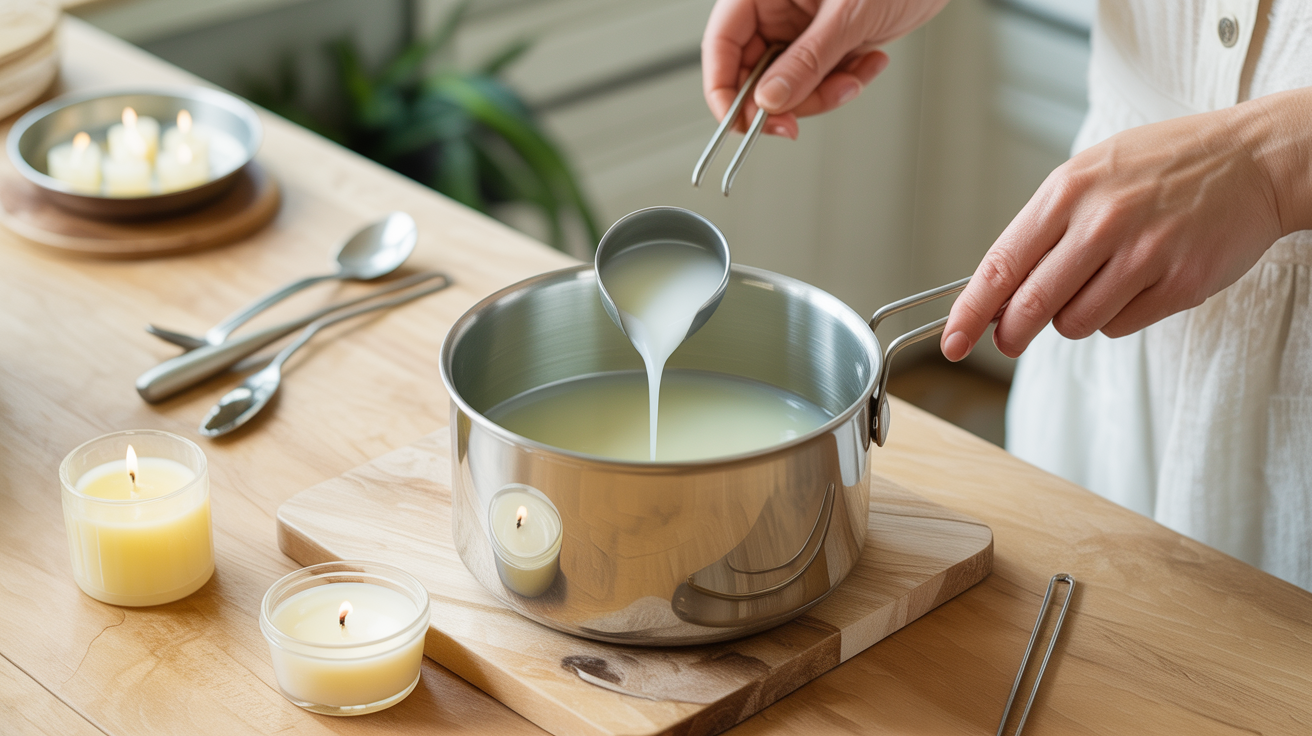
A double boiler is the go-to method for melting candle wax, and for good reason: it warms wax gently and evenly through indirect heat, which lowers the risk of scorching, reduces the chance of flare-ups, and gives you far more control over temperature than a pot sitting directly on a burner. If you have a large pot, a smaller metal pitcher or pouring pot, and a thermometer, you already have everything you need to melt wax the right way.
Hot wax behaves more like cooking oil than water: it can reach temperatures well above what causes skin burns without any visible signs of danger, and if it gets too hot it can smoke or, in serious cases, ignite. Working with a double boiler and a reliable thermometer is the single most important safety habit you can build from the start.
At a Glance
- A double boiler caps wax temperature near the boiling point of water, roughly 212°F (100°C), which keeps most waxes well clear of scorching or flashpoint territory.
- The core setup is a large pot, a smaller metal pouring pot, a rack or trivet to elevate it, and a thermometer, all equipment most kitchens already have.
- Pull the wax from heat 10 to 15°F (5 to 8°C) above your target pour temperature; it keeps rising briefly after leaving the water bath.
- Add fragrance between roughly 160 and 185°F (71 and 85°C) for most waxes, hot enough to bind but not so hot it burns off top notes.
- Never use water on a wax fire. Smother it with a lid instead.
- Reheating cooled wax in the same double boiler is safe and normal; just bring it back up slowly and recheck with the thermometer.
Why Indirect Heat Makes a Difference
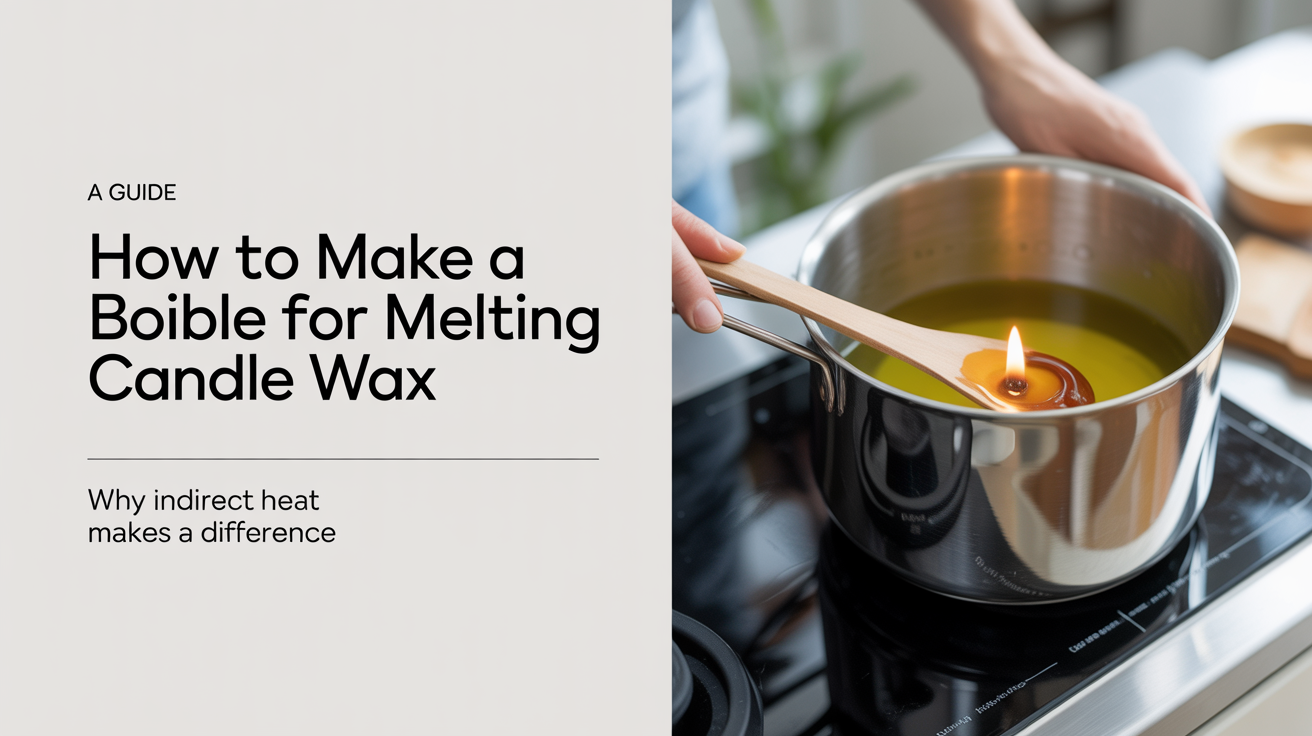
When you set a metal pouring pot inside a pot of simmering water, the wax inside never contacts the burner directly. The water acts as a buffer, capping the maximum temperature the wax can reach at roughly 212 degrees Fahrenheit (100 degrees Celsius) at sea level. That ceiling matters because most candle waxes melt well below the flashpoint, and the double boiler keeps things comfortably in range.
Direct heat, on the other hand, creates hot spots on the bottom of whatever container holds the wax. Paraffin can scorch. Soy wax can discolor. Any wax can overshoot its pour temperature quickly if you step away. A double boiler slows the whole process down in a useful way, and that extra margin for error is exactly what makes it the recommended method for anyone new to melting wax at home, rather than a specialty electric wax melter or a pot straight on the burner.
What You Need to Set One Up
You do not need to buy specialized equipment. Here is what works well:
- Large pot: A standard 4- to 6-quart stockpot fills the outer role. It just needs to be deep enough that the inner container sits stably without touching the bottom directly.
- Pouring pot or inner container: A dedicated metal pouring pitcher with a spout is ideal because you can pour straight into the vessel. A clean metal can (the kind large coffee or tomato-sauce comes in) works too. Avoid glass jars as the inner vessel: glass can crack from uneven heat when sitting in boiling water.
- A rack, folded towel, or silicone trivet: Place this on the bottom of the outer pot so the inner container sits slightly elevated rather than resting flat against direct metal-to-metal contact. This helps distribute heat more evenly and keeps the inner container from rattling.
- A clip-on or handheld thermometer: A candy thermometer or instant-read probe both work. Do not rely on guesswork; temperatures matter more in candle making than almost any other variable. See the candle pouring temperature guide for a deeper breakdown.
- A heat source: Any standard stovetop burner works. Electric and induction burners both give you reliable low-to-medium heat control.
A basic setup like this typically costs under $30 if you are starting from nothing, a $10-15 stockpot, a $10 pouring pitcher, and a $5-10 thermometer, and every piece is reusable indefinitely across hundreds of pours.
How to Melt Candle Wax in a Double Boiler
The process is straightforward, but a few details make it go smoothly.
-
Fill the outer pot with 2 to 3 inches of water. You want enough water to generate steady steam without the water level reaching the rim of the inner container. If water splashes into your melting wax, it can cause the wax to cloud, and steam burns are serious.
-
Place your rack or trivet in the bottom of the outer pot, then set your inner container on top.
-
Add your measured wax to the inner container. Weigh your wax before you start so you know exactly how much you are working with. Flaked or pellet wax melts faster than blocks; break blocks into smaller pieces before adding them.
-
Set the burner to medium-low. You want the water to simmer steadily, not boil aggressively. A rolling boil splashes more and heats the inner container unevenly.
-
Clip or hold your thermometer in the wax and monitor as it melts. Stir occasionally with a silicone spatula or metal spoon to encourage even melting and prevent any cooler pockets.
-
Pull the inner container from the water once the wax reaches 10 to 15 degrees Fahrenheit (5 to 8 degrees Celsius) above your target pour temperature. The wax will continue to rise slightly after it leaves the heat. Turn the burner off at this point.
-
Let the wax cool to your pour temperature before adding fragrance. For most waxes, fragrance is added between 160 and 185 degrees Fahrenheit (71 and 85 degrees Celsius). Adding fragrance too hot can burn off volatile top notes; adding it too cool can cause it to bind unevenly in the wax. Check the step-by-step soy candle pouring guide for a worked example.
A full melt cycle for an 8 oz to 1 lb batch typically takes 15 to 25 minutes on medium-low heat, depending on whether you started with flakes or broken block wax. Larger batches (multiple pounds at once) can take 40 minutes or more; resist the urge to crank the heat to speed things up, as that is exactly what reintroduces the scorching risk the double boiler is meant to prevent.
Melt and Pour Temperatures by Wax Type
Different waxes melt at different temperatures, and most have a recommended range. These figures are general starting points; always follow your specific supplier's guidance, since formulations vary.
| Wax Type | Typical Melt Range | Typical Pour Range | Time to Melt (1 lb, medium-low) |
|---|---|---|---|
| Soy (container) | 120-180 °F (49-82 °C) | 115-135 °F (46-57 °C) | 15-20 min |
| Paraffin (container) | 130-160 °F (54-71 °C) | 140-160 °F (60-71 °C) | 15-25 min |
| Coconut wax | 100-120 °F (38-49 °C) | 90-110 °F (32-43 °C) | 10-15 min |
| Beeswax | 145-165 °F (63-74 °C) | 140-160 °F (60-71 °C) | 25-35 min |
Pouring at the right temperature is one of the bigger factors in whether your candle tops come out smooth or pitted. If you have been fighting sinkholes or bumpy surfaces, read the guide on how to get a smooth candle top alongside this one.
Safety Rules to Follow Every Session
Hot wax does not look dangerous the way boiling water does. It will not visibly steam at typical pour temperatures, but it can cause serious burns on contact. The scale of the risk is easy to underestimate: the National Fire Protection Association reports that candle fires cause roughly 90 injuries per 1,000 reported home candle fires, a rate nearly three times higher than the average across all home fire causes, and unattended or misused candles account for about 1 in 5 of those incidents. The lesson carries directly over to the melting stage: a pot of wax left on a lit burner while you step away is the same category of risk as an unattended burning candle.
Keep these habits consistent:
- Keep a lid nearby. If wax in the pouring pot ever starts to smoke or shows any sign of igniting, slide a lid over the top to cut off oxygen. Do not use water on a wax fire.
- Never leave melting wax unattended. Wax can overheat and smoke within minutes if the burner is set too high and you step away.
- Work in a ventilated space. Open a window or run a kitchen exhaust fan. Fragrance oils have their own fumes, and paraffin wax especially benefits from airflow.
- Keep children and pets out of the workspace. A knocked-over pouring pitcher of hot wax is a genuine injury risk.
- Use oven mitts or silicone gloves when lifting the inner container out of the hot water bath.
- Have paper towels and a spill kit nearby. Hot wax hardens quickly on surfaces; the faster you catch a spill, the easier cleanup is.
- Keep the workspace clear of clutter. A cramped counter with papers, dish towels, or fabric near the burner adds fuel to the same short list of factors, an unattended flame plus something nearby that can catch, that the National Candle Association's safety tips flag for burning candles and that applies equally to any open flame or hot surface in the kitchen while you work.
Frequently Asked Questions
Can I use a glass bowl as the inner container in a double boiler?
It is better to avoid it. Glass can crack when sitting in simmering water, especially if the water temperature fluctuates. A metal pouring pitcher or a clean, sturdy metal can is a more reliable choice and much easier to pour from.
What if I do not have a thermometer?
Buy one before you pour. Guessing wax temperature by sight is unreliable and can mean pouring too hot (which leads to sinkholes and fragrance burn-off) or too cool (which causes poor fragrance binding and adhesion issues). A basic candy thermometer costs a few dollars and pays for itself on the first batch.
How much water should go in the outer pot?
Two to three inches is a good starting point. The water should not be able to splash into the inner container even when it simmers. If you need to melt wax for a long time, check the water level periodically and add more if it drops below an inch.
Can I reheat wax in the double boiler if it cools down before I pour?
Yes. Just return the inner container to the outer pot, turn the burner back on low, and bring the wax back up to pour temperature. Monitor the thermometer the same way you did the first time.
What is the difference between a dedicated wax melter and a double boiler?
A purpose-built electric wax melter is a small appliance that heats wax in a removable vessel. It is convenient and keeps temperature stable automatically. A DIY double boiler on the stovetop does the same job with equipment you likely already own. Either approach works; the double boiler is simply more accessible when you are starting out and not yet sure how often you will be making candles.
Is it safe to melt wax in a slow cooker instead of a double boiler on the stove?
A slow cooker on its lowest setting can work as an alternative to a stovetop double boiler, and some makers prefer it because it holds a steady low temperature without a burner to watch as closely. The trade-off is precision: slow cooker temperature settings vary by model and don't map neatly to specific degrees, so you still need a thermometer in the wax at all times, and you lose some of the fine control you get from adjusting a stovetop burner in real time.
How do I know if my wax has overheated even with a double boiler?
Watch for a change in smell (an acrid or burnt note rather than the wax's normal neutral scent), a darker or yellowed cast to wax that started out pale, or visible smoke rising from the surface. Any of those signs means the wax got hotter than intended, even with indirect heat, most often because the water was left at a rolling boil rather than a gentle simmer. If you see smoke, remove the pot from heat immediately and let it cool before checking the thermometer reading.