Projects & Scents
How to Make Candles as Gifts (and Package Them)
Learn how to make beautiful homemade candle gifts, choose the right scents, and package them so they arrive looking polished and thoughtful.
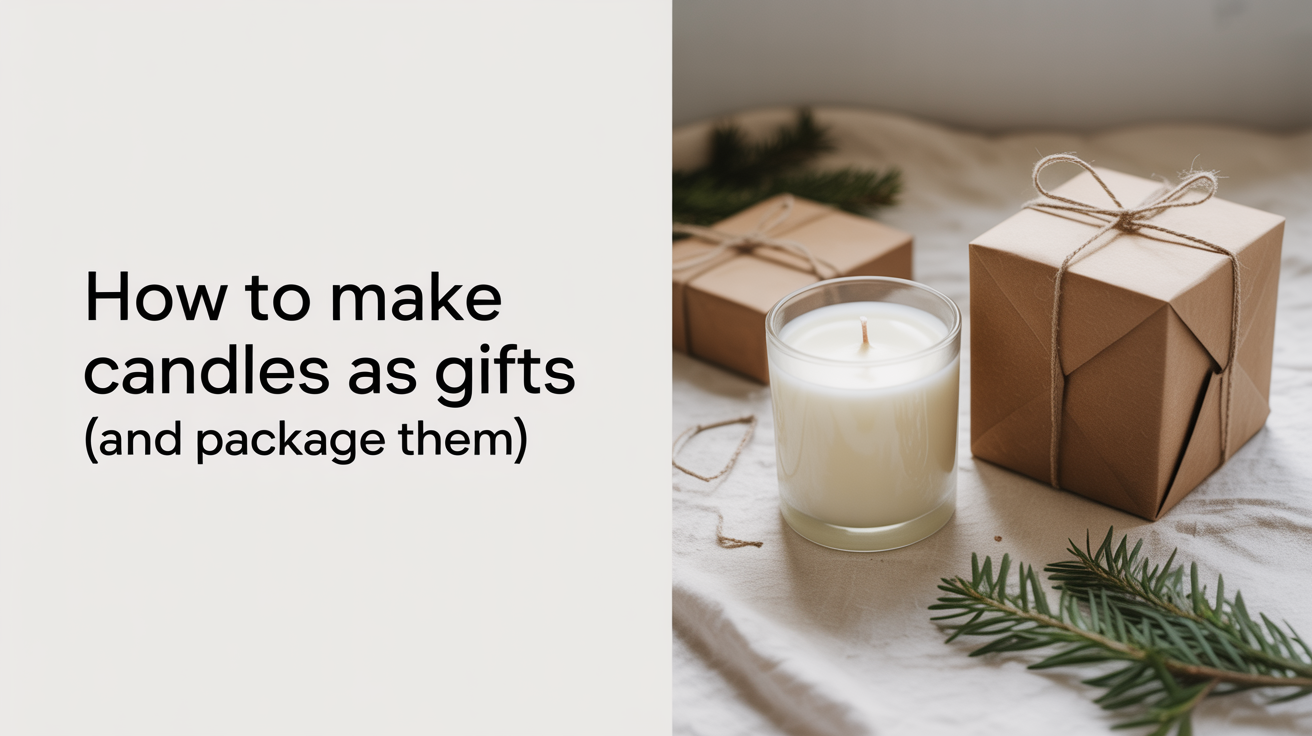
A homemade candle is one of those gifts that feels genuinely personal without requiring a huge budget or a full workshop setup. You control the scent, the vessel, the label, and the presentation, which means the finished product can match the recipient far better than anything off a shelf.
That said, gifting candles well takes a bit more thought than gifting candles you made for yourself. You want a clean burn, a scent the other person will actually enjoy, and packaging that holds up in transit. Here is how to pull all of that together from start to finish.
Choosing the Right Vessel for a Gift Candle
The container shapes everything else, so it is worth picking it first. For gifts, a few qualities matter beyond looks.
Lidded jars are the most practical gift option. The lid keeps dust out during storage, protects the wax surface if the candle is packed in a bag, and adds a second surface for a label or wax seal. Wide-mouth canning jars, short apothecary jars, and squat tumblers all work well with soy wax.
Tins travel well because they do not break. They weigh less than glass, which helps if you are mailing the candle or giving it as part of a larger gift basket. The trade-off is that you cannot see the wax, and tins can dent if handled roughly.
Ceramic vessels look beautiful but add weight and fragility. If you go this route, use sturdier packaging material and consider whether the recipient will actually reuse the vessel after the candle burns down, since that often justifies the extra care.
Avoid very narrow-necked containers for gift candles, especially if the recipient is not a candle person. A narrow opening traps heat, makes tunneling worse, and makes it hard to trim the wick safely. Stick to straight-sided or slightly tapered jars where the opening is at least as wide as the body.
Picking a Scent That Works as a Gift
Scent is the trickiest part of a gift candle because it is so personal. A few strategies help you land something the recipient will like.
Think about what they already use. If someone gravitates toward citrus cleaning products, cedar soap, or vanilla lotion, their candle preferences likely run in that same direction. You are not guessing at random; you are reading clues.
Neutral, crowd-pleasing scents tend to travel better as gifts than polarizing ones. Clean cotton, linen, light florals, soft cedar, and baked vanilla are broadly liked. Very strong musks, heavy incense blends, and certain gourmand scents (think buttered rum or funnel cake) are loved by some people and disliked by others.
If you want to build your own blend rather than use a single fragrance oil, the layering approach covered in how to blend candle fragrances like a pro gives you a framework for combining a base, middle, and top note without the result smelling muddy.
Keep your fragrance load within the wax manufacturer's recommended range, usually 6 to 10 percent by weight for most container soy waxes. Going above that to try to make a "stronger" gift candle usually backfires: excess fragrance oil pools on the surface, creates a greasy finish, and can lower the flashpoint to a point where the candle is unsafe. More fragrance does not equal more throw.
Pouring a Gift-Quality Candle
The process for a gift candle is the same as for any other container candle, but the quality bar is higher because someone else will see the surface. A few things to watch for.
Melt temperature. Most container soy waxes melt fully between 170 and 180 degrees Fahrenheit (77 to 82 degrees Celsius). Use a thermometer rather than guessing. If you have not worked through a full pour before, how to make scented soy candles in jars walks through the full process including wick centering and fragrance timing.
Fragrance addition temperature. Most fragrance oils should be added between 150 and 165 degrees Fahrenheit (65 to 74 degrees Celsius), after the wax drops below its initial melt point. Adding fragrance at too high a temperature can burn off the top notes and reduce scent throw in the finished candle.
Pour temperature. For a smooth, flat surface with minimal frosting, soy wax is typically poured between 130 and 145 degrees Fahrenheit (54 to 63 degrees Celsius). Pour slowly and try to avoid disturbing the wax once it is in the jar. Pouring from too high above the vessel introduces air bubbles.
Second pour. Container soy wax pulls away from the sides and sinks slightly as it cools, leaving a small depression around the wick. Melt a small amount of the same wax, let it reach a similar temperature, and do a shallow top-up pour to level the surface. This one step makes a noticeable difference in how professional the finished candle looks.
Let the candle cure for at least 24 to 48 hours before testing or packaging it. Soy wax continues to bind with the fragrance oil during this window, and the scent throw improves noticeably.
How to Package Candles for Gifting
Good packaging does two things: it protects the candle and it sets the tone before the recipient even lifts the lid.
Labels. A printed or handwritten label on the jar gives the candle a finished look and tells the recipient what they are getting. At minimum, include the scent name and a burn time estimate. You can add your name or a short note if this is a personal gift. Waterproof label paper works better than regular paper, which peels at the edges after a few hand-wash cycles on the jar.
Boxes and wrapping. Tall kraft boxes with tissue paper are a clean, simple option for a single jar candle. If you are giving two or three candles together, a shallow gift box with a ribbon works well. Avoid plastic wrap pulled tight across the wax surface since it can leave an impression or stick during temperature changes in shipping.
Protective padding. If the candle is going in a bag or a box with other items, wrap it in tissue and add at least an inch of padding around the glass. Crinkle cut paper filler, bubble wrap, or shredded kraft paper all work. The goal is to keep the jar from shifting and knocking against other objects.
Lids and closures. If the jar has a metal lid, wipe the rim with a clean cloth before closing it so there is no fragrance oil residue that could affect the seal. A wax seal, a small sticker, or a band of twine over the lid adds a nice detail without being fussy.
Burn warning card. This is optional but genuinely useful, especially if the recipient is new to candles. A small card with basic instructions (trim the wick to 1/4 inch before every burn, never leave unattended, keep away from drafts and children) helps them get a good first experience. It also protects the candle from being burned wrong and then blamed on your pour.
If you are not sure which candle styles make sense to turn into gifts, easy beginner candle projects to try first covers several formats that translate well to gifting, including single-wick tins and small jar sets.
Frequently Asked Questions
How far in advance can I make candle gifts? Soy candles are stable for several months if stored away from direct sunlight, heat, and strong competing odors. Making them four to six weeks ahead gives the fragrance time to fully bind with the wax, which can actually improve scent throw. If you are making a batch for the holidays, starting in early autumn is reasonable. Store finished candles with lids on to keep the surface clean.
Do I need to include any safety warnings on gift candles? If you are giving them to friends and family, a small burn instruction card is courteous but not legally required. If you are selling candles, labeling rules vary by country and region. For personal gifts, the main thing to communicate is wick trimming and not leaving a burning candle unattended. Most people appreciate a short note over a wall of fine print.
Why does the top of my gift candle look rough or uneven? Soy wax is prone to frosting (a white, powdery film) and wet spots (areas where the wax pulls away from the glass). Both are cosmetic and do not affect burn quality or scent, but they can make a gift candle look unfinished. A top-up pour after the first cool-down smooths out sinkholes. Frosting is harder to prevent entirely in soy wax, but pouring at a lower temperature and covering the candles loosely while they cure can reduce it.
What is a good fragrance load for a gift candle people will actually smell? Most container soy waxes perform well at 8 to 10 percent fragrance by weight. So for a 6-ounce candle, that is roughly 0.5 to 0.6 ounces of fragrance oil. Measuring by weight rather than volume gives more consistent results. Going above the manufacturer's maximum load does not improve throw and often creates surface pooling or wick performance issues.
Can I give candles made with fragrance oils that contain allergens? Many fragrance oils contain ingredients that are common sensitizers, such as certain musks, linalool, or limonene. If you know the recipient has fragrance sensitivities, check the fragrance oil's safety data sheet or IFRA documentation for allergen disclosures. For people with known sensitivities, an unscented candle in a nice vessel is a thoughtful alternative to a scented one.