Pouring & Technique
The First Burn: How to Cure the Memory Ring
Learn why the first burn sets your candle's melt path for life, how to get a full melt pool, and what to do if tunneling has already started.
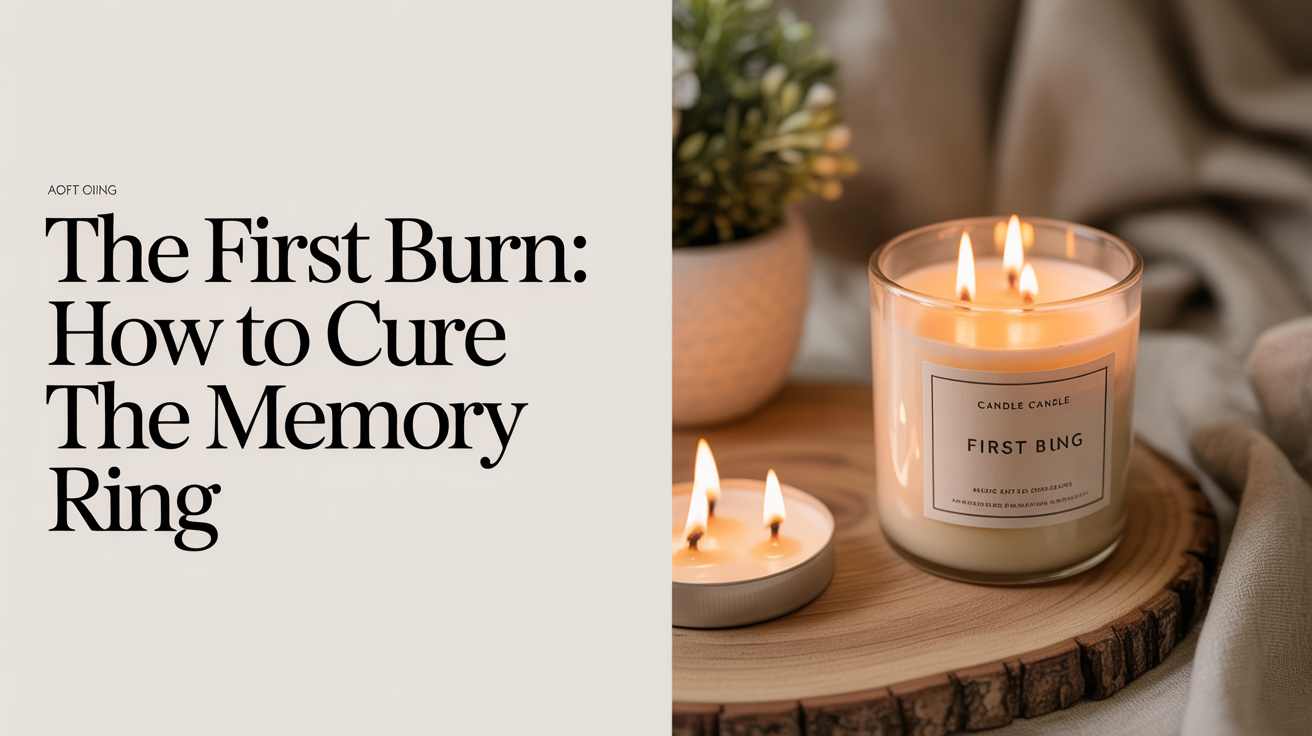
The first time you light a new candle matters more than any burn that follows it. Wax has a kind of muscle memory: it tends to melt along the same path it took during the very first session. If that path stops short of the container wall, the candle locks in a narrow tunnel and every subsequent burn deepens it. If the melt pool reaches the full edge on the first burn, the candle follows that wider path from then on.
Curing the memory ring is simply the practice of burning a candle long enough on its debut to establish a full-diameter melt pool. It costs nothing extra and takes patience rather than skill, but skipping it can ruin a candle you spent real time and money making.
What the Memory Ring Actually Is
When a wick burns, heat radiates outward through the surrounding wax, melting a pool around the flame. That pool expands until the candle is extinguished and the wax re-solidifies. On the next burn, the wax reaches its liquid state first along that same radius, reinforcing the shape the pool cut the time before.
If the first melt pool stopped an inch from the edge, the candle memorizes that circle. Subsequent burns follow the boundary and slowly tunnel downward, leaving a thick wall of unmelted wax on the outside. The candle burns shorter than it should, throws less scent, and wastes a significant portion of the wax you poured.
Curing the ring means giving the first burn enough time to push liquid wax from one side of the container to the other. Once that wider circle sets, the candle has a new reference to follow.
How Long the First Burn Should Last
The practical guideline is one hour for every inch (2.5 cm) of the candle's diameter. A three-inch jar needs roughly three hours. A four-inch vessel may need four. The exact time varies by wax type, wick size, and fragrance load, so watch the candle rather than just the clock.
You will know the melt pool is ready when liquid wax covers the full surface, reaching the edge of the container with no dry patches remaining. A thin film of soft wax touching the glass is not enough; the pool should be fully liquid across the entire diameter.
Steps to follow during the first burn:
- Trim the wick to 1/4 inch (6 mm) before lighting. A long wick creates a large, restless flame that can overheat the wax on one side while leaving the other cool, producing an uneven pool.
- Place the candle on a flat, heat-resistant surface away from drafts, fabrics, and anything flammable. Tilted candles pool asymmetrically, which causes problems that compound over time.
- Never leave a burning candle unattended. Active wax pools can reach 130 to 165°F (54 to 74°C) at the surface, which is more than enough to cause serious burns on contact.
- Do not burn beyond four hours at a stretch. If the melt pool has not reached the edge after four hours, extinguish the candle, let the wax harden completely, then relight and continue. Safety limits do not pause for the first-burn rule.
- Keep burning candles away from children and pets at all times.
If four continuous hours still cannot push a full melt pool in a wide-diameter vessel, the wick is likely undersized for that container. A wick that cannot throw heat to the outer wall cannot cure the memory ring no matter how long you burn it. See Candle Pouring Temperature: A Beginner's Guide for how pour temperature and wick selection work together across different wax blends.
How Wax Type Affects the Melt Pool
Not all waxes pool at the same rate or temperature, so the first burn looks slightly different depending on what you poured.
Soy wax has a melt point between 120 and 145°F (49 to 63°C), depending on the grade and additive load. It pools more slowly than paraffin and can look wet or translucent at the edges before a true liquid pool has formed. Give soy candles the full hour-per-inch time and check that the pool is genuinely liquid before calling the first burn done.
Paraffin wax melts at higher temperatures, often between 130 and 165°F (54 to 74°C), and spreads into a pool more quickly. A small-diameter paraffin candle may achieve a full pool in 90 minutes; a wide one still benefits from the full guideline.
Coconut and coconut-soy blends have lower melt points similar to soy but spread outward readily once they liquefy. Results vary enough by blend ratio that the only reliable method is observing your specific combination in your specific vessel during a test burn before committing to a full pour run.
For a step-by-step walkthrough of the actual pour process and how wax temperature affects adhesion to the container wall, see How to Pour a Soy Candle Step by Step.
What to Do If Tunneling Has Already Started
If a candle went through its first burn without reaching the edge, all is not lost, though options narrow as the tunnel deepens.
For shallow tunneling (less than half an inch deep, with thin outer walls):
- Wrap a sheet of aluminum foil around the top rim of the jar, folding it over the edge with a small opening left in the center for the flame and airflow. The foil reflects heat back onto the wax walls and encourages them to melt inward. Check the candle every 30 minutes and never leave it alone while the foil is in place.
- Once the candle is fully cool and solid, use a butter knife or spoon to gently break away and remove the outer ring of raised wax around the tunnel. Leveling the surface gives the wick a better chance of spreading a full pool on the next attempt.
For deep tunneling (more than an inch down, with the wick partially buried):
- Try warming the outer wax wall with a hair dryer on low heat before the next burn, softening the surrounding wax so the wick has less resistance to overcome.
- If the wick is fully drowned in cooled wax, carefully clear it with a toothpick or skewer before attempting to relight.
The honest assessment is that a deep memory ring is difficult to fully erase. The foil and leveling tricks can improve things but rarely restore a tunneled candle to pristine condition. Starting the first burn correctly is considerably easier than repairing the damage afterward.
Getting a Clean Surface After the First Burn
Once the melt pool has reached the edge, extinguish the flame and let the candle cool at room temperature without moving it. Airflow, a cooler surface, or anything that speeds the cooling process can cause the wax surface to wrinkle, crack, or sink in the center as the wax contracts unevenly.
Soy candles are particularly prone to frosting and rough texture as they set. Covering the jar loosely with a piece of cardboard while it cools traps a small amount of radiant heat and slows the solidification rate, which usually produces a flatter, smoother surface. For more detail on achieving a consistent finish, How to Get a Smooth Candle Top walks through the main techniques and the reasons behind each one.
Frequently Asked Questions
What happens if the first burn does not reach the edge of the container? The wax memorizes the shorter radius. On every subsequent burn, the melt pool follows that same boundary and carves progressively deeper into the center. The outer wax stays solid, fragrance throw drops, and the candle burns shorter than it otherwise would.
How do I know for certain the melt pool has reached the edge? Look straight down at the candle. Liquid wax should cover the entire top surface with no dry or opaque patches at the outer rim. A soft or slightly warm zone near the glass does not count; you want full liquidity across the diameter.
Can I stop the first burn early and resume it later? You can pause and resume if the total burn time approaches four hours before the pool is complete. Extinguish, let the wax fully solidify, then relight. The memory does not fully set until the wax cools, so picking up where you left off on a second session still contributes to establishing the wider pool, though a single continuous burn is more reliable when it fits safely within the four-hour limit.
Does the first burn rule apply to all candle types? It is most relevant for container candles, where the vessel traps the wax and the tunnel pattern becomes permanent. Pillar candles are designed differently and are generally intended to develop a partial melt pool that holds the outer wall intact. For anything poured into a jar, tin, or other container, the first burn rule applies every time you open a new candle.
What causes a wick to not reach the edge even after four hours? The most common reason is that the wick is undersized for the vessel diameter. Manufacturers typically provide wick charts showing recommended sizes by diameter and wax type; if the wick you chose sits at the low end of the range for your container, consider moving up one size on your next test batch.