Wax & Materials
Coconut Wax and Wax Blends: What Beginners Should Know
Coconut wax holds fragrance well and burns clean, but it has quirks worth knowing before your first pour. Here's a practical beginner's guide.
Coconut wax has picked up a lot of attention in candle-making circles over the last few years, and for good reason. It holds fragrance well, burns cleaner than paraffin, and produces a creamy, smooth surface that looks polished right out of the mold. But it also has a low melting point, soft texture, and a tendency to behave unexpectedly when you change your pour temperature by even a few degrees, which catches plenty of beginners off-guard.
If you've been reading about types of candle wax and wondering whether coconut wax is worth trying, this guide covers what it actually is, how to work with it safely, and how it compares when blended with other waxes like soy or paraffin.
At a Glance
- Container-grade coconut wax melts around 100-107°F (38-42°C), the lowest working range of any common candle wax.
- Pure coconut wax is soft and prone to wet spots and sinkholes, so most makers blend it 60/40 to 70/30 with soy for a firmer, more predictable candle.
- Fragrance load typically runs 6-10% by weight, with most container blends performing best around 8%.
- Cure coconut wax candles for at least 48 hours, ideally 3 to 5 days, before the first burn.
- Container-grade coconut wax is too soft for pillars. You need a firm or pillar-grade coconut wax, or a hardened blend.
- Trust the supplier's technical data sheet over any general rule here. Melt points and fragrance loads shift by brand.
What Coconut Wax Actually Is
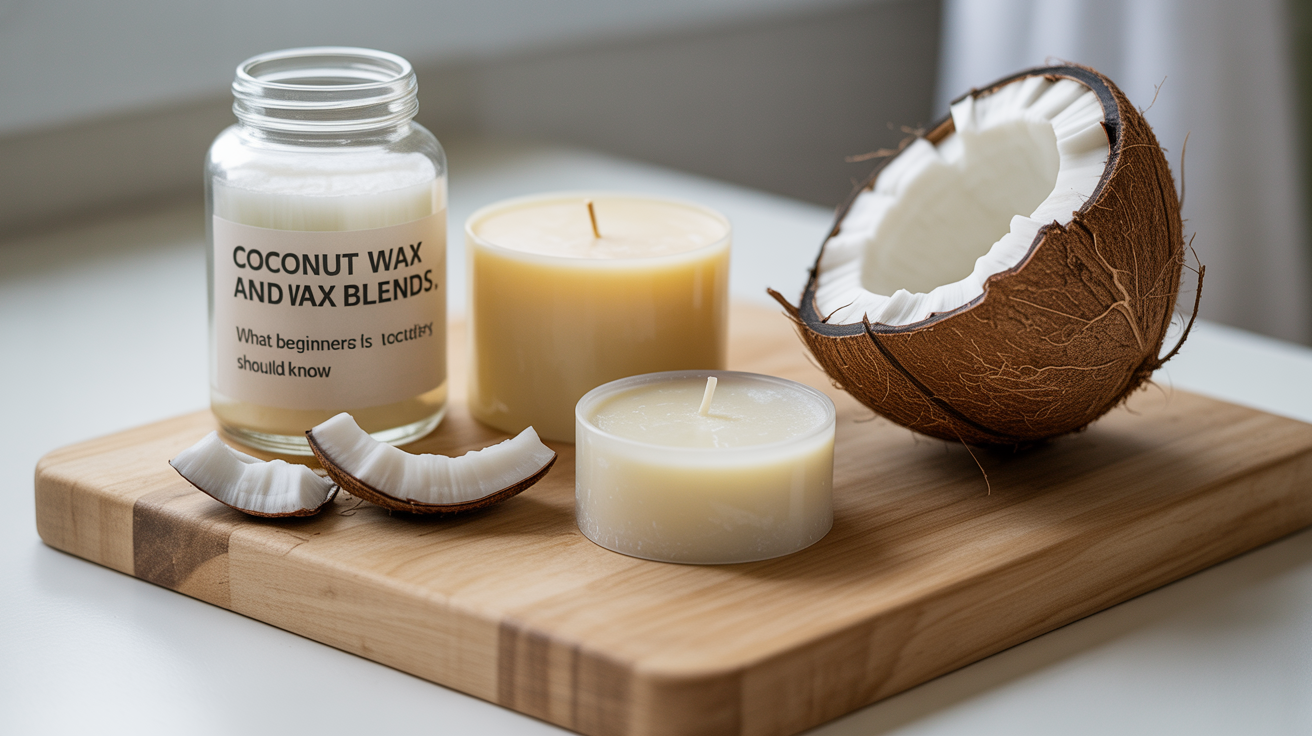
Coconut wax is made from hydrogenated coconut oil. Hydrogenation adds hydrogen atoms to the oil's fatty acid chains, which raises its melting point from liquid at room temperature to a soft solid suitable for candle containers. According to Wikipedia's entry on coconut oil, hydrogenated coconut oil has a melting point of roughly 36-40°C (97-104°F), compared to about 24°C (75°F) for the unhydrogenated oil, and manufacturers raise that melting point specifically so products made from it stay solid in warm climates. That's the same chemistry candle wax suppliers rely on: the more fully hydrogenated the oil, the firmer and higher-melting the resulting wax.
It's not quite the same as refined coconut oil you'd find in a grocery store, though the base ingredient is the same.
Because it's derived from a renewable crop (coconuts), it's sometimes marketed as a natural wax alongside soy and beeswax. That said, "natural" is worth taking with some skepticism since all waxes go through processing, including hydrogenation, before they reach you as a finished product.
Coconut wax comes in several grades:
- Container grade: Softer, lower melting point, designed for jars and tins. The most common variety for beginners.
- Pillar/firm grade: Harder formula with a higher melting point, suitable for freestanding pillar candles.
- Blended grades: Many suppliers sell coconut wax pre-blended with soy, paraffin, or other additives to improve performance.
Always check the technical data sheet for the specific product you buy. Melt points, pour temperatures, and fragrance load recommendations vary between brands and grades, sometimes by 10°F or more even within the same "container grade" label.
Melt and Pour Temperatures for Coconut Wax
This is where safety matters most. Hot wax can burn skin on contact and ignite if overheated. The National Candle Association's safety guidance calls for keeping candles and hot wax on stable, heat-resistant surfaces away from anything flammable and never leaving a heat source unattended; those same rules apply while you're actively melting and pouring, not only while a finished candle is burning. Use a dedicated thermometer, work near a sink, keep a lid or fire blanket within reach, and keep children and pets out of the workspace.
Container-grade coconut wax typically has a melt point around 100 to 107°F (38 to 42°C). That sounds low, and it is. In a warm room during summer, a finished coconut wax candle can soften noticeably at the surface. This also means you don't need high heat to melt it, which is a real safety advantage: you're working at roughly half the temperature a paraffin melt requires.
Typical working temperatures for coconut wax:
| Stage | Temperature (°F) | Temperature (°C) |
|---|---|---|
| Melt point (approx.) | 100-107°F | 38-42°C |
| Fragrance add temperature | 130-140°F | 54-60°C |
| Pour temperature (into jar) | 120-135°F | 49-57°C |
These are starting ranges only. Your supplier's datasheet takes priority. Some brands recommend pouring as low as 110°F (43°C); others say to stay above 130°F (54°C) to prevent the wax from seizing around the wick before it sets. Test before committing to a full batch.
Add fragrance oil at the higher end of the range (around 130 to 140°F / 54 to 60°C), stir for at least two minutes, then let the wax cool slightly to your pour temperature before going into the jar. Pouring too hot causes sinkholes. Pouring too cool causes lumpy surfaces or incomplete adhesion to the container wall.
Fragrance Load in Coconut Wax
Coconut wax is known for good fragrance throw, both cold (what you smell when the candle isn't lit) and hot (the scent that fills a room while burning). It can typically hold 6 to 10 percent fragrance oil by weight, though most container grades perform well at 8 percent.
To calculate:
- Weigh your wax (for example, 200 grams)
- Multiply by your fragrance percentage (200 × 0.08 = 16 grams of fragrance oil)
Always check the flashpoint of your fragrance oil. If the flashpoint is below your add temperature, you risk burning off the scent or, in rare cases, creating a fire hazard. Most quality fragrance oils have flashpoints above 170°F (77°C), but verify this for every fragrance you use.
Beyond flashpoint, reputable fragrance suppliers also provide an IFRA compliance certificate for each oil, which caps how much of it is safe to use in a burned product. Those certificates are drawn from the IFRA Standards Library, a searchable database of fragrance-ingredient usage limits maintained by the International Fragrance Association. If a fragrance oil comes with no documentation you can trace back to a certificate, treat that as a reason to ask your supplier before scaling a batch up, not as a minor detail to skip past.
Don't exceed the supplier's recommended maximum fragrance load for the wax. Going above it doesn't automatically create a stronger-smelling candle. It often creates one that leaks oil, has trouble adhering to the container, or produces a weak flame because the wick is drowning in fragrance.
Common Coconut Wax Blends
Most candle makers don't use pure coconut wax. They use blends, and for good reason: pure coconut wax can be soft, prone to surface issues, and difficult to find in consistent supply. Blending solves most of those problems.
Coconut-Soy Blend (the most popular)
Mixing coconut wax with soy wax (typically in ratios like 70/30 or 60/40 coconut-to-soy) produces a blend that's firmer than pure coconut, easier to work with, and still performs well for fragrance. This is what many boutique candle brands use. If you've been reading about soy wax, you'll notice soy on its own can produce frosting and grainy tops. Coconut wax helps reduce those problems.
Pour temperature for coconut-soy blends usually falls between 130 and 145°F (54 to 63°C). Let the wax cool slowly and undisturbed after pouring.
Coconut-Paraffin Blend
Some commercial waxes blend coconut oil with paraffin for a harder, more stable candle. The result burns longer and holds shape better in warm environments. If sustainability is a priority for you, check the ratio since paraffin is petroleum-derived.
Pre-Blended Supplier Products
Many suppliers sell products like "coconut apricot wax" or "luxury coconut blend," which are proprietary mixes optimized for container candles. These are convenient for beginners because the supplier has already done the testing work. The tradeoff is less control over what's in the wax and sometimes a higher cost per pound compared to buying pure components and blending yourself.
Coconut Wax Compared to Other Common Waxes
| Wax | Typical Melt Point | Fragrance Load | Beginner Difficulty | Best For |
|---|---|---|---|---|
| Pure coconut (container) | 100-107°F (38-42°C) | 6-10% | Moderate; soft and temperature-sensitive | Luxury jars, strong cold throw |
| Coconut-soy blend (60/40 to 70/30) | 115-130°F (46-54°C) | 6-10% | Easier than pure coconut | Most beginner container candles |
| Pure soy (container) | 120-130°F (49-54°C) | 6-10% | Easy, widely documented | Budget-friendly jar candles |
| Paraffin (container) | 130-150°F (54-66°C) | 6-12% | Easy, forgiving | Strongest hot throw, lowest cost |
| Beeswax | 145-150°F (63-66°C) | Usually unscented or lightly scented | Harder; pricier, low fragrance load | Natural, long-burning pillars |
Coconut-soy blends split the difference: firmer than pure coconut, better fragrance throw than pure soy, and forgiving enough that a first batch is unlikely to be a total loss.
What Can Go Wrong with Coconut Wax
Soft surface or fingerprint marks: Coconut wax stays softer than paraffin at room temperature. This is normal. It doesn't mean your batch failed, but it does mean these candles need more careful handling and storage, especially in summer.
Wet spots: These are areas where the wax pulls away from the glass as it cools, creating clear or translucent patches on the jar wall. Coconut wax is prone to this. Pouring at a slightly lower temperature, warming your jars before pouring, and avoiding drafts during cooling all help. Wet spots don't affect burn quality.
Sinkholes: If you pour too hot or the center cools faster than the outside, you get a sunken crater in the middle. This is a wick well for fragrance to pool in later, which is a fire risk. Do a second small pour to fill it once the first pour has mostly set.
Wick issues: Because coconut wax is soft and has a different burn profile than soy or paraffin, wick sizing can feel unpredictable. A wick that works in your soy candle may drown or mushroom badly in coconut wax. Plan for extra test burns, especially when you switch to a new fragrance.
Slow or stalled cure: If a coconut wax candle still smells faint after five days, the fragrance load may be low for that particular oil, or the fragrance was added at too low a temperature to fully incorporate. Before assuming the next batch needs more fragrance oil, check your notes on what temperature you added it at. That's the more common culprit.
Frequently Asked Questions
Is coconut wax harder to work with than soy wax?
For most beginners, they're similar in difficulty. Coconut wax is softer and more temperature-sensitive, so small changes in pour temperature tend to show up more noticeably in the finished candle. Starting with a pre-tested coconut-soy blend from a reputable supplier is often easier than working with pure coconut wax.
Does coconut wax need a different wick than soy wax?
Often yes. Coconut wax is softer and burns differently, so you'll usually need to re-test your wick selection even if you've been making soy candles for a while. The vessel diameter, fragrance load, and fragrance type all interact with the wick. There's no substitute for burn testing.
Can I use coconut wax for pillar candles?
Container-grade coconut wax is too soft for freestanding pillars. You'd need a firm or pillar-grade coconut wax, or a blend with a higher melting point. If you're curious about harder waxes like beeswax, that's worth reading alongside this since beeswax holds its shape naturally at room temperature.
Why does my coconut wax candle look oily or sweating?
This usually means the fragrance load exceeded what the wax can bind, or the fragrance was added at a temperature that was too low to fully incorporate. Let the candle cure for 48 hours. If the oil doesn't absorb, you'll need to adjust your fragrance percentage down in the next batch.
How long should coconut wax candles cure before the first burn?
At least 48 hours, and ideally 3 to 5 days. Coconut wax, like soy, benefits from curing time because the fragrance continues binding with the wax as it sets. A candle poured on Monday and burned on Saturday will almost always throw scent better than one burned the next morning.
How much does coconut wax cost compared to soy?
Coconut wax generally runs somewhat higher per pound than soy, and pre-blended "luxury" coconut mixes cost more still. If you're testing coconut wax for the first time, buy a one to two pound sample bag rather than a full case. That keeps the cost of finding out whether you like working with it low, and you'll still have plenty for two or three test pours.
Is coconut wax more fire-safe than other waxes?
Not meaningfully. All common candle waxes melt far below their flashpoint, and the fire risk comes from overheating or an unattended flame, not from which wax you chose. The National Candle Association's safety tips recommend the same core precautions (a heat-resistant surface, no unattended flame, keeping candles away from drafts and flammable materials) regardless of wax type.