Wax & Materials
Soy Wax for Candles: A Complete Beginner's Guide
Everything beginners need to know about soy wax candles: types, working temperatures, fragrance loads, common quirks, and curing times.
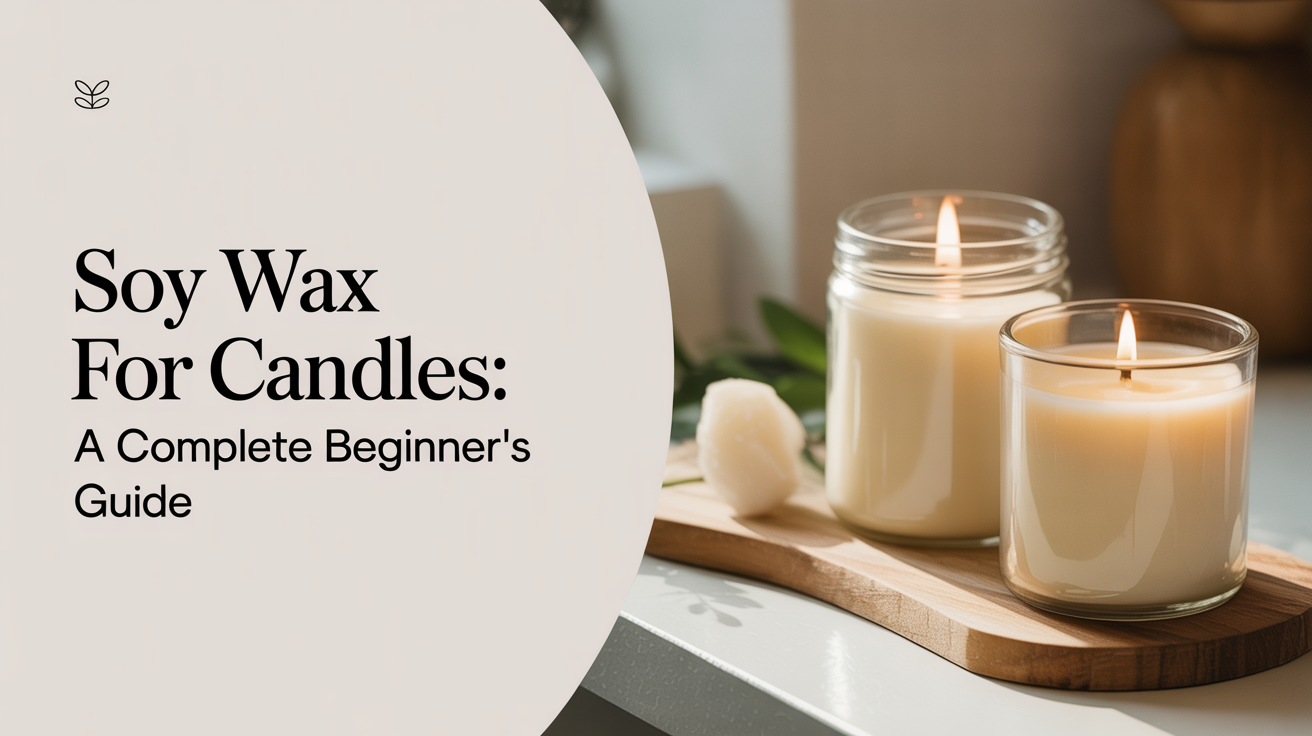
Soy wax is what most beginners reach for first, and for good reason. It's made from hydrogenated soybean oil, it burns cleaner than paraffin, and it behaves predictably in jars. If you've never poured a candle before, soy gives you a forgiving starting point.
This guide covers the two main types of soy wax, every key temperature you'll need, the quirks that trip up new makers, and how long to wait before you light your first test burn.
Why Soy Wax Works Well for Beginners
Soy wax has a lower melting point than paraffin, which means you're working with less heat. That reduces the risk of scorching fragrance oils or overheating your container. It's also water-soluble, so cleanup is soap and warm water instead of solvents.
The wax comes from a renewable crop, which matters to a lot of makers. More practically, soy holds fragrance oil well and bonds cleanly to glass jars. For a first candle in a Mason jar or a straight-sided vessel, it's hard to beat.
One honest caveat: soy has a softer scent throw than paraffin, especially cold (unlit). If you've only ever burned paraffin candles, your first soy candle might smell subtler. That's normal. Hot throw (when it's burning) tends to be stronger than cold throw, and choosing the right fragrance load helps.
For a side-by-side look at how soy stacks up against other options, see Paraffin vs Soy Wax: Which Should Beginners Use and Types of Candle Wax Explained for Beginners.
Container Soy vs Pillar Soy: Know the Difference
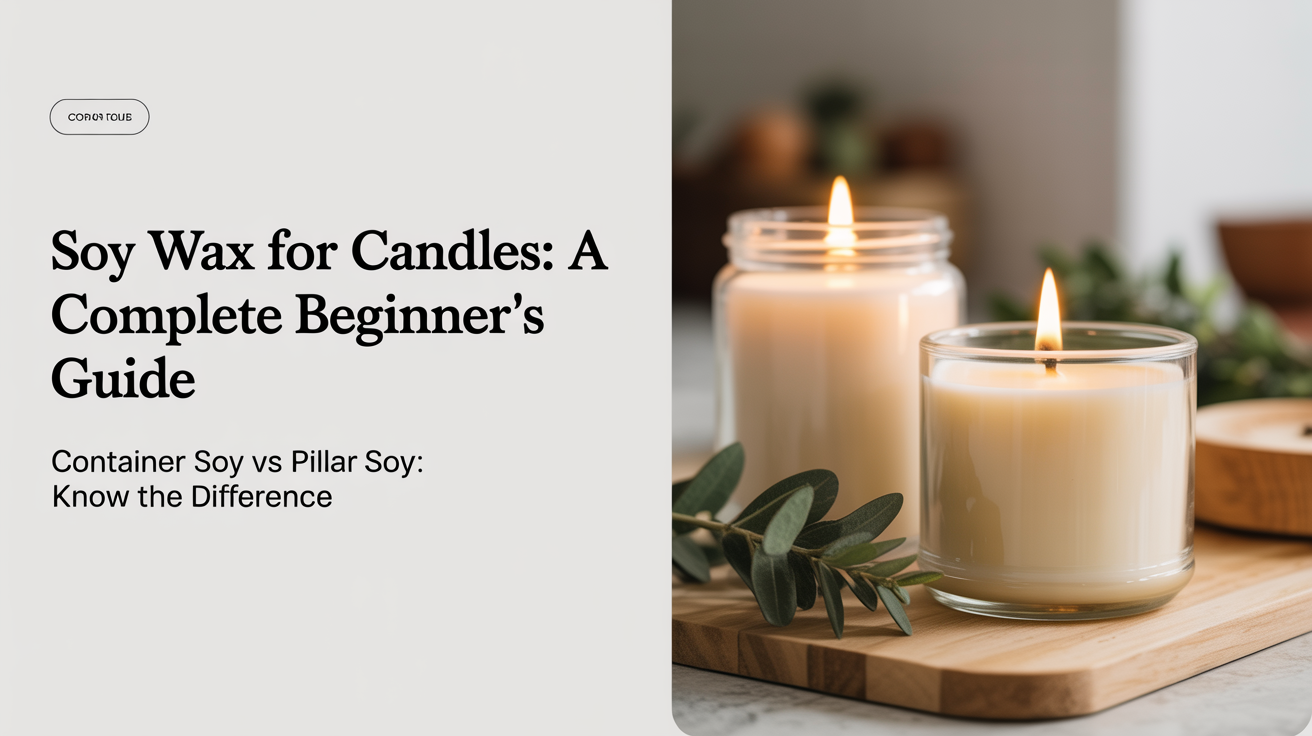
Not all soy wax is the same. The two main categories serve different purposes, and using the wrong one is one of the most common beginner mistakes.
Container Soy Wax
Container soy (sometimes labeled 464, 444, or similar grade numbers) is formulated to stay soft. It's designed to adhere to the sides of a jar as it cools and shrinks, which gives you a smooth, pull-free finish. Use it for:
- Mason jars
- Tin containers
- Apothecary jars
- Any vessel the candle won't be removed from
Container soy is NOT suitable for pillar or votive molds. It's too soft to hold its shape once unmolded.
Pillar Soy Wax
Pillar soy is a harder, higher-melting blend that can stand on its own after unmolding. It's less common than container grades and requires more testing to get a clean finish. If you're just starting out, skip pillar soy for now. Container soy in a jar is the faster path to a good first result.
Working Temperatures for Soy Wax
Temperature is everything in candle making. Too hot and you degrade the fragrance; too cool and the wax won't bind properly. Here are the ranges that work for most container soy waxes:
| Step | Temperature (°F) | Temperature (°C) |
|---|---|---|
| Melt point (typical) | 120–125°F | 49–52°C |
| Add fragrance oil | 175–185°F | 79–85°C |
| Pour into container | 130–140°F | 54–60°C |
| Room temp for setup | 65–75°F | 18–24°C |
Why These Numbers Matter
Add fragrance at 175–185°F (79–85°C). This is hot enough for the fragrance oil to bind fully into the wax. Adding it when the wax is too cool can cause fragrance separation, which shows up as oily pools on the surface.
Pour at 130–140°F (54–60°C). Pouring cooler than this helps prevent sinkholes and gives you a smoother top. Some makers pour even cooler (around 120°F / 49°C) to reduce frosting, though results vary by wax brand.
Stir the fragrance gently for about two minutes. Vigorous stirring introduces air bubbles; slow, thorough stirring binds the oil without trapping air.
Always use a digital thermometer. Eyeballing wax temperature is guesswork.
Fragrance Load for Soy Wax
Most container soy waxes accept 6–10% fragrance by weight. Some brands are tested up to 12%, but more isn't always better. Overloading fragrance causes seeping, poor burn performance, and fire risk.
| Wax Amount | 6% Load | 8% Load | 10% Load |
|---|---|---|---|
| 100 g | 6 g fragrance | 8 g fragrance | 10 g fragrance |
| 454 g (1 lb) | 27 g fragrance | 36 g fragrance | 45 g fragrance |
| 1 kg | 60 g fragrance | 80 g fragrance | 100 g fragrance |
Start at 6–8% and test burn before pushing higher. The wax supplier's spec sheet will list the maximum load for your specific grade.
Soy Wax Quirks: Frosting and Soft Tops
Soy wax does two things that alarm new makers but are almost always harmless.
Frosting
Frosting is a white, powdery or crystalline film that forms on the surface or sides of a soy candle. It looks like mold or a defect, but it's a natural property of soy. The wax recrystallizes slightly after pouring, especially in cooler rooms or with temperature swings.
You can reduce frosting by:
- Pouring at a lower temperature (closer to 120–125°F / 49–52°C)
- Keeping your filled jars at a stable room temperature while they set
- Avoiding drafts during cooling
You won't eliminate it entirely with natural soy. Consider it a sign that the wax is genuinely natural, not a sign that something went wrong.
Soft Surface
Soy candles have a softer top than paraffin. Press your finger into a cured soy candle and you'll leave a slight indent. This is normal. It doesn't affect burn quality. If you're selling candles and want a harder surface, some makers blend soy with a small amount of beeswax (see Beeswax Candles: Pros, Cons, and How to Work With Beeswax for how beeswax behaves in blends).
Curing Soy Candles
Curing is the waiting period after your candle has fully solidified. During cure, the fragrance oil continues to bind with the wax matrix, which strengthens scent throw.
The standard cure time for soy wax is 48 hours minimum, with 1–2 weeks being ideal. This is one of the most skipped steps in beginner candle making and one of the most important.
A candle tested at 24 hours might smell weak and burn poorly. The same candle at 7 days often performs noticeably better. If you're testing a new fragrance or blend, cure for a full week before drawing conclusions.
Keep curing candles in a cool, stable spot away from direct sunlight. Cover them loosely (a paper towel works) to keep dust off without trapping moisture.
Safety Note
Always melt soy wax in a double boiler or a dedicated wax melter. Never melt wax directly on an open flame or unattended on a stove. Keep a dry chemical fire extinguisher nearby, not water (water causes grease/wax fires to flare). Use a dedicated pouring pitcher that you don't also use for food. Work in a ventilated space, especially when adding fragrance oils. Fragrance oils are not the same as essential oils and should not be handled like cosmetics.
Frequently Asked Questions
Is soy wax better than paraffin for beginners?
"Better" depends on your priorities. Soy is easier to clean up, burns with less soot, and comes from a renewable source. Paraffin gives a stronger cold throw and is more widely available in small quantities. For a first jar candle, soy is the more forgiving choice.
Why does my soy candle look lumpy or have a rough top?
Rough or lumpy tops usually mean the wax cooled too quickly or unevenly. Pour in a warm room (around 70°F / 21°C), avoid drafts, and don't move the jars while they're setting. You can also do a second thin pour once the first has set, just to level the top.
Can I use soy wax for wax melts?
Yes. Container-grade soy wax works well for wax melts. The fragrance load can go slightly higher (up to 10–12%) since there's no wick to worry about. Pour at the same temperatures, let cure for at least 48 hours.
How do I know which soy wax to buy?
Look for a grade rated for containers if you're making jar candles. Common options include Golden Brands 464 and 444. Check the supplier's recommended pour temp and maximum fragrance load; those specs vary between grades and matter for your results.
My candle has a white film on the glass. Is it ruined?
That's frosting, and no, it's not ruined. The candle is safe to burn. Frosting is purely cosmetic. If the appearance bothers you, try pouring at a slightly lower temperature next batch.