Wax & Materials
Types of Candle Wax Explained for Beginners
A plain-language guide to the most common candle wax types — soy, paraffin, beeswax, coconut, and blends — with melt points, scent throw, and who each suits.
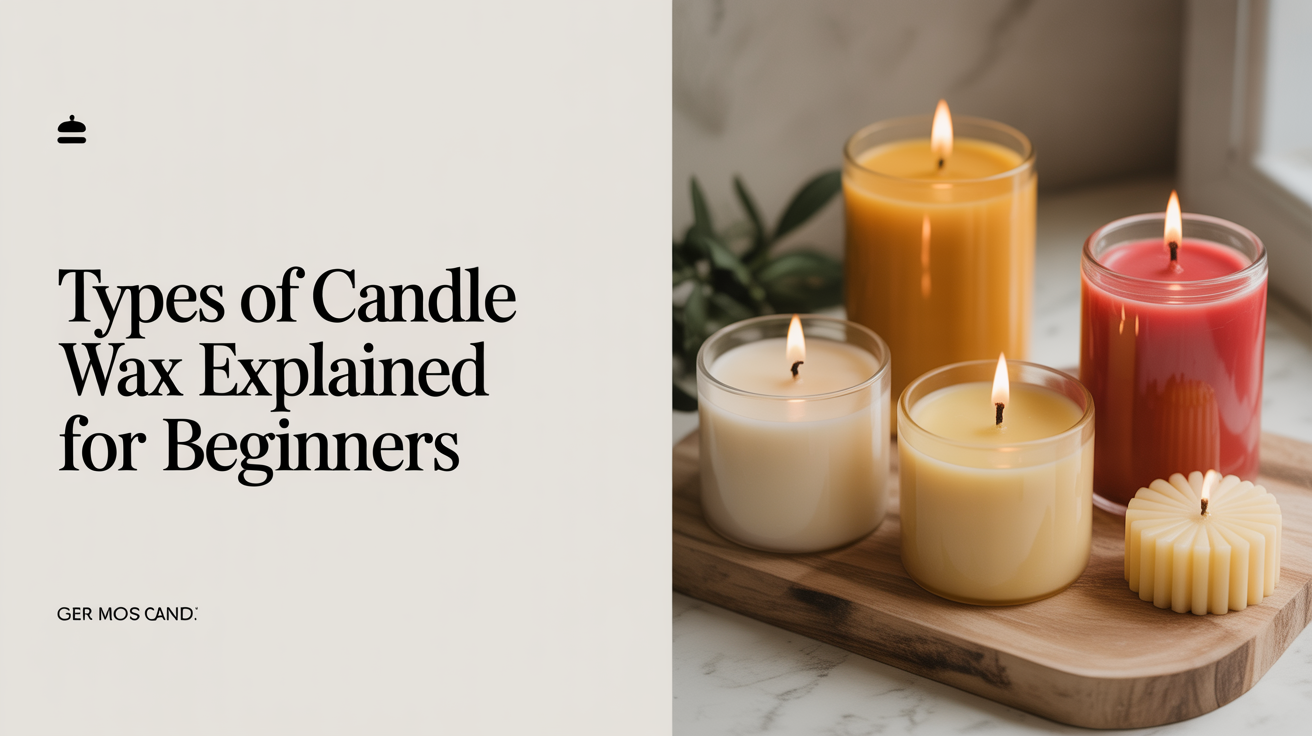
Walk into any craft shop and you'll see shelves lined with bags labeled "soy flakes," "paraffin pellets," and "beeswax pastilles." For a first-timer, the differences are not obvious. Each wax has its own melt point, working temperature, scent-carrying ability, and burn behavior. Pick the wrong one for your project and your candle might tunnel, sweat, or barely throw any fragrance at all.
This guide covers five main wax categories: soy, paraffin, coconut, beeswax, and blends. By the end you'll know which one suits your setup, your budget, and the type of candle you want to make.
At a Glance
- Soy is the friendliest starting point for container candles: low melt point, easy cleanup, moderate scent throw.
- Paraffin gives the strongest scent throw and is the traditional choice for pillars, votives, and tapers.
- Coconut wax is the softest and most expensive of the common waxes, prized for a clean burn and premium feel.
- Beeswax has the highest melt point of the group and its own natural honey scent, which competes with added fragrance.
- Blends (soy-paraffin, coconut-soy, soy-beeswax) exist to combine strengths: better scent throw, lower cost, or more structural stability.
- Regardless of wax type, candles are heated well above boiling-water temperature, so a thermometer and a clear workspace matter more than which wax you pick.
A Quick Safety Note Before You Start
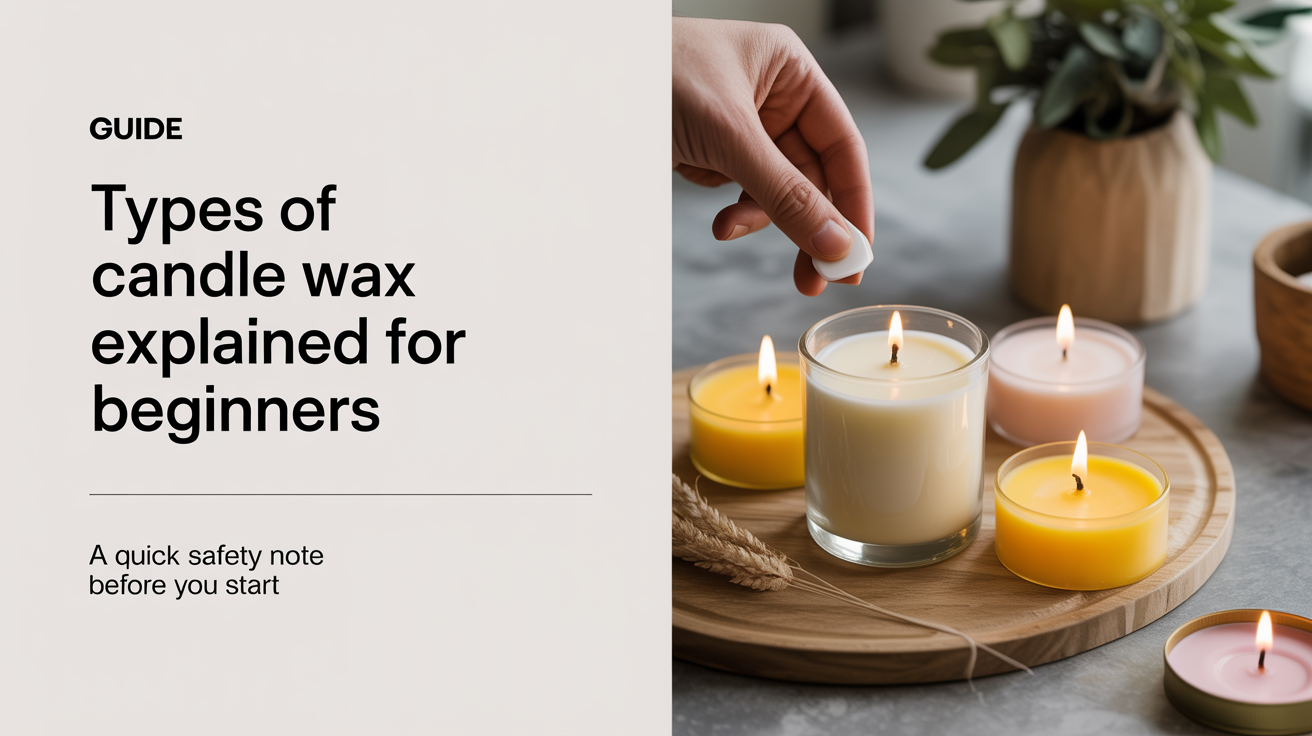
All candle wax is heated to well above boiling water temperature. Paraffin can exceed 200°F (93°C). A splatter or accidental spill on bare skin causes an immediate burn. Use a dedicated pouring pitcher, a reliable thermometer, and keep a fire extinguisher nearby. Never leave melting wax unattended on the stove, and never use a microwave without a thermometer. These precautions apply regardless of which wax you choose.
The stakes are not hypothetical. The National Fire Protection Association reports that an average of 20 home candle fires are reported in the United States every day, and in roughly one in five of those fires the candle had been left unattended, discarded while still burning, or otherwise misused. Most of that risk sits on the burning side, not the pouring side, but the same habits, staying present, keeping a clear workspace, and never walking away from an active heat source, carry over directly to melting wax on the stove.
Soy Wax
Soy wax is made from hydrogenated soybean oil. It comes in flake or pellet form, melts cleanly, and is the go-to choice for most beginners making container candles.
What It's Like to Work With
Soy flakes melt at a low temperature (around 120–180°F / 49–82°C depending on the blend), which means less risk of scorching and more time to add fragrance oil at the right temperature. It pours smoothly, adheres well to glass jars, and cleans up with soap and warm water. The main quirk is frosting, a white powdery bloom that appears on the surface as the wax cools. It's purely cosmetic and harmless, but it surprises beginners who expect a perfectly smooth finish.
Melt Point
Most container soy waxes melt between 120°F and 135°F (49–57°C). Pillar-grade soy runs higher, up to about 180°F (82°C), because it needs to hold its shape outside a container.
Scent Throw
Soy has a moderate cold throw (how a candle smells unlit) and a decent hot throw (how it smells while burning), though it generally produces a softer scent than paraffin. To get a stronger throw, use a fragrance load of 6–10% by weight and let the candle cure for at least 48 hours before testing.
Burn Characteristics
Soy burns slowly and relatively cleanly. A well-wicked soy container candle in an 8 oz jar can last 40–50 hours. Because it burns at a lower temperature, wick selection matters a lot, and you may need to test several wick sizes to avoid tunneling.
Who It Suits
Soy is the friendliest starting point for container candles. If you're making your first batch in Mason jars or tin containers, start here. Check out our deeper breakdown in A Complete Beginner's Guide to Soy Wax for Candles.
Paraffin Wax
Paraffin is a petroleum byproduct and has been the industry standard for candle-making for over a century. It's affordable, widely available, and produces a strong scent throw that soy struggles to match.
What It's Like to Work With
Paraffin is sold in slabs, pellets, or blocks. It melts faster than soy and reaches higher working temperatures. Fully refined paraffin (the kind used in most candle making) is white or translucent and pours cleanly. The main downside for beginners is that it can produce more soot if the wick is too large or the fragrance load is too high. Cleanup requires mineral spirits rather than soap and water.
Melt Point
Paraffin melt points vary significantly by grade. Container paraffin sits around 125–135°F (52–57°C). Pillar and votive grades run 140–160°F (60–71°C), while hard, fully refined paraffin can reach 160–175°F (71–79°C). Always check the spec sheet for the specific product you buy.
Scent Throw
This is where paraffin excels. It holds fragrance oil well and releases it more aggressively when burning. Hot throw is noticeably stronger than soy at the same fragrance load. For pillar candles, votives, or any application where a powerful scent presence matters, paraffin delivers. That said, "stronger" is not a green light to add more fragrance oil than the wax can bind. Fragrance oils formulated for candles are built to comply with IFRA Standards, the fragrance industry's safety-based limits on maximum ingredient concentration in a finished product, and pushing well past a supplier's recommended load does not scale scent linearly, it mostly increases soot and pooling risk.
Burn Characteristics
Paraffin burns faster than soy. A paraffin candle may last 20–30% fewer hours than a comparable soy candle. It can produce a small amount of black soot, especially if the wick is oversized or there's a draft, so keep candles away from vents and trim wicks to 1/4 inch before each burn.
Who It Suits
Paraffin is a good choice for pillar candles, votives, and taper candles where you need the wax to hold shape without a container. It's also practical if budget is a concern or if you want maximum scent throw. Compare it directly to soy in Paraffin vs Soy Wax: Which Should Beginners Use.
Coconut Wax
Coconut wax is made from cold-pressed coconut oil that's been hydrogenated. It's the most expensive of the common waxes and has become popular in premium candle lines.
What It's Like to Work With
Coconut wax is very soft at room temperature. It cannot hold a freestanding shape, so it's almost always used in containers or blended with harder waxes. It takes color and fragrance oil well and has excellent adhesion to glass. The low melt point means you need to work carefully to avoid overheating.
Melt Point
Coconut wax melts between 100°F and 107°F (38–42°C), the lowest of the waxes covered here. In warm climates, a coconut wax candle may soften noticeably even unlit.
Scent Throw
Coconut wax has good cold throw and a warm, clean hot throw. Fragrance oils tend to bind well to it. Hot throw is generally comparable to soy, and some makers argue it's slightly better for certain fragrance families.
Burn Characteristics
Coconut wax burns slowly and very cleanly with minimal soot. It tends to produce a smooth, creamy top surface. Burn times are long, often comparable to or exceeding soy.
Who It Suits
Coconut wax is best for experienced beginners who want to produce a premium, natural container candle and are willing to pay roughly two to three times the cost of soy. It's also popular in coconut-soy blends that combine affordability with performance.
Beeswax
Beeswax is the oldest candle-making material and the only one that comes straight from an animal source. It has a natural honey scent and a high melt point that makes it excellent for pillar and taper candles.
What It's Like to Work With
Beeswax is harder and stickier than other waxes. It contracts significantly when cooling, which can leave sink holes in container candles. Pillar candles made from beeswax hold their shape beautifully and burn with a bright, warm flame. Because beeswax has its own natural fragrance, adding heavy perfume oils can muddy the scent profile. Many beeswax candle makers use little or no added fragrance. Cleanup requires scrapers and hot water; beeswax sticks to everything.
Melt Point
Beeswax melts between 143°F and 148°F (62–64°C), significantly higher than soy or coconut. You need careful temperature control to avoid scorching.
Scent Throw
Beeswax has a soft, inherent honey-beeswax scent that many people find pleasant on its own. Added fragrance throw is moderate. It does not carry synthetic fragrance oils as readily as paraffin, so if strong scent is your goal, beeswax is not the best vehicle.
Burn Characteristics
Beeswax burns longer and hotter than paraffin or soy. A pure beeswax pillar candle can last significantly longer than a soy equivalent at the same size. The flame is bright and the drip rate is low. Beeswax also has the advantage of not going rancid or discoloring over time.
Who It Suits
Beeswax is ideal for pillar, taper, and rolled candles. It suits makers who want a natural, minimally processed material and are comfortable with the higher price (beeswax typically costs three to five times more than soy per pound). For a thorough look at the trade-offs, see Beeswax Candles: Pros, Cons, and How to Work With Beeswax.
Wax Blends and Palm Wax
Most commercial candles are not made from a single pure wax. Blends are common because they let makers combine the strengths of two or more waxes while mitigating the weaknesses.
Common Blends
Soy-paraffin blends are popular for container candles. A typical ratio is 70–80% soy to 20–30% paraffin. The paraffin boosts scent throw and reduces frosting; the soy keeps costs moderate and improves burn time.
Coconut-soy blends are sold as premium "natural" products. They pour smoothly, throw scent well, and have a creamy surface finish without the full cost of 100% coconut wax.
Soy-beeswax blends give pillars better structural integrity than pure soy while reducing the beeswax content to keep costs manageable.
Here is roughly how a blend shifts performance compared with the two pure waxes it's built from, using a common 75/25 soy-paraffin ratio as a worked example:
| Property | 100% Soy | 75/25 Soy-Paraffin | 100% Paraffin |
|---|---|---|---|
| Melt point | 120–135°F (49–57°C) | ~128–140°F (53–60°C) | 125–135°F (52–57°C) |
| Hot throw | Moderate | Good | Strong |
| Frosting risk | Higher | Lower | None |
| Approx. cost per lb | $ | $$ | $ |
| Burn time (8 oz jar) | 40–50 hrs | 35–45 hrs | 30–40 hrs |
Palm Wax
Palm wax deserves a mention. It's a hard, high-melt-point wax derived from palm oil that creates distinctive crystalline or feathered surface patterns. It's used in pillar and container candles and has good scent throw. The significant concern with palm wax is sustainability. Palm oil production has been linked to deforestation and habitat loss, and buyers who want to keep using it should look for suppliers whose palm oil is certified sustainable rather than take a "natural" label at face value. Many makers have moved away from palm wax entirely for this reason.
Who Blends Suit
Blends suit makers who have tried a single-wax candle and want to fine-tune the result. If your soy container candle has weak scent throw, a small addition of paraffin (10–15%) often helps. If your beeswax pillar is too expensive to scale, a 70/30 beeswax-soy blend reduces cost without sacrificing much in burn quality.
Wax Comparison Table
| Wax | Melt Point (°F / °C) | Scent Throw | Best For | Difficulty |
|---|---|---|---|---|
| Soy (container) | 120–135°F / 49–57°C | Moderate | Container candles | Beginner |
| Paraffin (container) | 125–135°F / 52–57°C | Strong | Containers, pillars, votives | Beginner |
| Paraffin (pillar) | 140–160°F / 60–71°C | Strong | Pillars, votives, tapers | Intermediate |
| Coconut | 100–107°F / 38–42°C | Moderate–Good | Premium containers | Intermediate |
| Beeswax | 143–148°F / 62–64°C | Low–Moderate | Pillars, tapers, rolled candles | Intermediate |
| Soy-paraffin blend | 125–140°F / 52–60°C | Good | Containers | Beginner |
| Palm | 140–155°F / 60–68°C | Moderate | Pillars, decorative candles | Intermediate |
Frequently Asked Questions
What is the easiest wax for a beginner?
Soy wax is the most beginner-friendly choice for container candles. It melts at a low temperature, is forgiving to work with, cleans up easily, and is widely available. The main learning curve is wick sizing and curing time.
Does the type of wax affect how long a candle burns?
Yes, noticeably. Beeswax and coconut wax tend to burn the longest because of their dense structure and high melting points. Paraffin burns faster than soy. For any wax, the wick size has as much influence on burn time as the wax itself, an oversized wick will burn even a slow, dense wax like beeswax faster than it needs to.
Can I mix different waxes together?
You can, and many candlemakers do. The key is keeping notes on your ratios and testing each batch before selling or gifting. Some combinations (like soy and paraffin) blend easily at similar temperatures. Others, like coconut and beeswax, need more care because of their different melt points.
Why does my soy candle have a white powdery coating?
That's frosting, a natural characteristic of soy wax as it recrystallizes during cooling. It doesn't affect burn performance or scent. Pouring at a slightly lower temperature, pouring slowly, or adding a small percentage of paraffin or coconut wax can reduce it. Some makers simply accept it as a marker of natural soy wax.
Is paraffin dangerous to burn indoors?
Paraffin candles are safe for indoor use when wicks are properly sized and trimmed. The soot concern is mostly from oversized wicks or candles burned in drafty conditions. All candles, regardless of wax type, produce some byproducts when burned. Keep any candle in a well-ventilated room, away from flammable materials, and never burn for more than four hours at a stretch.
How much wax should I buy for my first batch?
Buy more than you think you need. Melting wax always leaves a thin film in the pot and pitcher, and beginners often need a second attempt on their first pour or two. A 5 lb bag is a practical starting size for most soy or paraffin projects and leaves room for test pours. Weigh your jar's water capacity first and multiply by roughly 0.85 to get a per-candle wax weight, then scale that number up with a 10 to 15 percent buffer for the whole batch.
Which wax holds fragrance the longest after curing?
Paraffin and coconut-soy blends tend to hold fragrance strength the longest on the shelf because they bind fragrance oil tightly and are less porous than pure soy. Pure soy candles can lose some scent intensity over several months if stored in a warm room or exposed to light. Keeping any finished candle in a cool, dark place slows that fade regardless of wax type.