Wax & Materials
Palm Wax Candles Explained for Beginners Trying a New Wax
Palm wax candles look different from soy or paraffin from the start. Here is what beginners should know about pouring, cooling, and buying it responsibly.
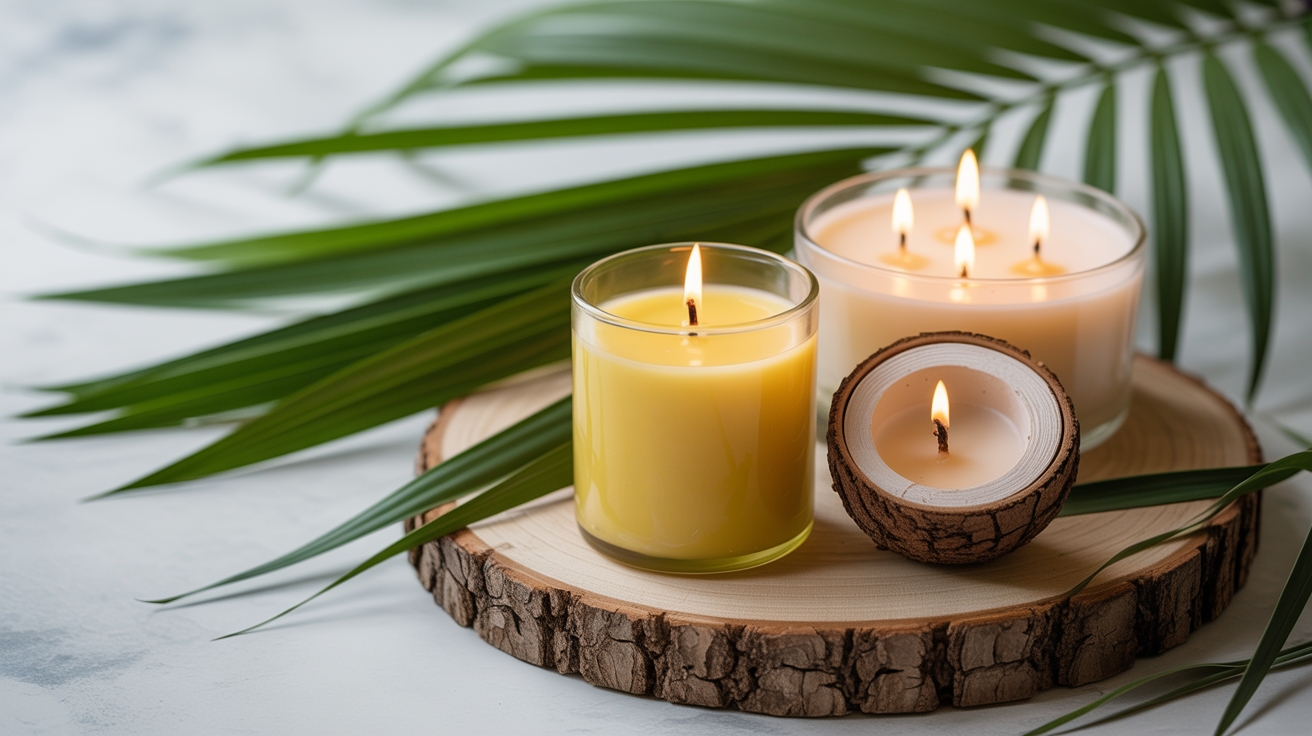
If you have only ever poured soy or paraffin, palm wax candles will surprise you the first time you unmold one. Instead of a flat, smooth surface, you get a feathery, crystallized texture that looks almost frosted from the inside out. That effect is not a mistake or a sign you did something wrong. It is the whole point of the wax, and it is the reason a lot of hobbyists eventually add a bag of palm wax flakes to their shelf next to the soy and paraffin they already use.
Palm wax behaves differently at almost every stage, from melting to cooling to how it looks once it sets. This guide walks through what makes it distinct, how it stacks up against the waxes you already know, and what to watch for the first time you pour it.
What Makes Palm Wax Different
Palm wax comes from the oil of the palm fruit, and it is refined and hydrogenated into a wax that is naturally solid and quite hard on its own. That matters because soy wax, by contrast, is often soft enough that makers blend in a hardening additive like vybar to get a cleaner container candle or a pillar that holds its shape. Palm wax generally does not need that step. It is firm straight out of the bag, which is part of why it works so well as a freestanding pillar.
The signature look comes from how the wax molecules arrange themselves as they cool. Given the right conditions, palm wax forms crystal structures that show up as a feathery, snowflake-like pattern on the surface and sometimes all the way through the candle if you slice it. Some makers pour it specifically to show off this pattern on the outside of a pillar, using a mold that lets the crystallization happen against the mold wall.
Palm Wax Compared to Soy and Paraffin
Anyone who has read through the basics in our guide to the different types of candle wax knows that every wax trades off scent throw, hardness, and ease of use in different ways. Palm wax sits in an interesting spot compared to the two waxes most beginners start with.
Against soy, palm wax is harder, holds a crisp pillar shape better, and doesn't need additives to firm up. Soy is generally more forgiving for a first-time container pour and tends to be gentler on scent throw complaints, since it burns at a lower, steadier pool temperature. If you're still deciding between the two most common starter waxes, our soy versus paraffin comparison covers that decision in more depth, and most of those same tradeoffs apply loosely when you slot palm wax into the comparison too.
Against paraffin, palm wax burns a bit cleaner and comes from a plant source rather than petroleum, which appeals to makers who want to market a candle as more natural. Paraffin still edges out palm wax on raw scent throw for a lot of fragrance oils, since paraffin tends to carry fragrance especially well. Palm wax throw is respectable but usually described as a notch behind paraffin and roughly comparable to a well-blended soy candle, depending on the fragrance oil.
Melting and Pouring Temperatures
You will notice right away that palm wax wants a hotter pour than soy. Where soy is often poured on the cooler side to avoid frosting (ironic, given palm wax frosting is the goal here), palm wax typically needs to be melted and held at a higher temperature range to stay fluid and pour cleanly. Follow your specific supplier's technical data sheet for exact numbers, since palm wax blends vary, but expect the working temperatures to run noticeably warmer than a typical soy pour and closer to, or above, a paraffin pour.
Because it sets up firmer and faster than soy once it starts cooling, you generally have a shorter working window. Have your fragrance oil weighed and your containers or molds ready before you start melting, since palm wax does not give you as much time to second-guess your setup once it's off the heat.
Why Slow, Controlled Cooling Matters
This is the step that trips up most beginners coming from soy or paraffin. With those waxes, you usually want a controlled but fairly ordinary cool-down, maybe with a heat gun pass to fix any surface cracks. Palm wax needs something more deliberate.
The crystallization pattern that makes palm wax candles recognizable only shows up properly when the wax cools slowly and evenly, without drafts, cold surfaces, or sudden temperature swings interrupting it. Many makers wrap the mold in a towel or place it somewhere free of air currents while it sets, sometimes for several hours longer than they would leave a soy pillar. Cool it too fast and you lose the feathery pattern and can end up with a duller, more uneven surface instead. Cool it unevenly (say, one side of the mold near a window) and the crystallization will look blotchy rather than consistent.
If you want the pattern to show on the outside of a pillar rather than just inside the cut cross-section, this is also where mold choice matters. A metal or polycarbonate pillar mold pressed right up against the cooling wax tends to produce a more defined crystallized skin than a flexible silicone mold.
Scent Throw and Burn Qualities
Palm wax holds fragrance oil reasonably well, though most makers describe the throw as solid rather than exceptional, similar to a decent soy blend and a step behind paraffin for most fragrance oils. Because the wax is naturally harder, it also tends to have a smaller, more controlled melt pool than soy, which some makers prefer for pillars since a smaller pool means less risk of the candle collapsing in on itself or pooling over the edge.
Wick choice matters just as much here as it does with any other wax. A wick sized for soy will often burn too small in palm wax because the harder wax needs more heat to maintain a full melt pool, so expect to test up a size or two from what you would use in a soy container of the same diameter, and always do a full test burn before finalizing a recipe.
Where Palm Wax Fits: Pillars and Containers
Palm wax is best known as a pillar wax because its natural hardness lets a candle hold a freestanding shape without a container, and because the crystallized surface reads best on an exposed pillar rather than hidden inside a jar. That said, container work with palm wax does exist, usually in blends that soften it slightly for a smoother container pour while still keeping some of the visual texture. If you are curious about blended options generally, our piece on coconut wax and wax blends is a useful next stop, since a lot of the same blending logic (taking one wax's strengths and offsetting its weaknesses with another) applies to palm-based blends too.
Sourcing Palm Wax Responsibly
Palm oil and its derivatives, including palm wax, carry a real environmental reputation problem tied to deforestation and habitat loss in the regions where oil palms are grown at industrial scale. That history is worth taking seriously rather than shrugging off. Before you buy, look for suppliers who can tell you their palm wax is sourced from certified sustainable growers, commonly referenced under a recognized sustainable palm oil certification scheme. A supplier that can't answer a direct question about sourcing is worth a second look before you commit to a large order.
Pros and Cons of Palm Wax for Beginners
Pros:
- Naturally hard and solid without needing additives, so pillars hold their shape well
- Produces a distinctive crystallized finish that's hard to replicate with other waxes
- Burns cleaner than paraffin and comes from a renewable plant source
- Smaller, more controlled melt pool that some makers find easier to manage in pillars
Cons:
- Needs a hotter pour and a longer, more careful cooling process than soy
- Scent throw is decent but usually not as strong as paraffin
- Less forgiving for a rushed first attempt since the crystallization is sensitive to drafts and temperature swings
- Sourcing sustainably takes extra research and can cost more than an uncertified supplier
Frequently Asked Questions
Is palm wax good for beginners?
It's a reasonable second or third wax to try once you're comfortable with the basics of melting, pouring, and wicking, since it demands more attention to temperature and cooling than soy. If it's your very first candle ever, soy or a beginner-friendly blend is usually an easier starting point.
Why did my palm wax candle come out smooth instead of crystallized?
The most common cause is cooling too quickly or unevenly, often from a draft, a cold room, or an insulated mold that pulled heat away from one side faster than the other. Try wrapping the mold and setting it somewhere still and at a consistent room temperature next time.
Can I mix palm wax with soy or paraffin?
Yes, blended waxes that include palm are common, and they can soften palm wax's hardness for container use or add a bit of firmness to a soft soy blend. Test any blend in small batches first, since the crystallization pattern usually fades once palm wax makes up a smaller share of the mix.
Does palm wax need a different wick than soy?
Usually yes. Because palm wax is harder and needs more heat to sustain a melt pool, a wick sized correctly for soy in the same container will often burn too small. Expect to test one or two sizes larger and always confirm with a full test burn.
How do I know if my palm wax is sustainably sourced?
Ask your supplier directly whether their palm wax comes from growers certified under a recognized sustainable palm oil program, and ask for documentation if you're selling candles commercially. If a supplier can't answer clearly, treat that as a reason to keep shopping around.