Wax & Materials
The Best Containers and Vessels for Candles
A beginner's guide to choosing safe candle containers. Learn which jars work, what sizes to use, and how to pick the right vessel for any wax type.
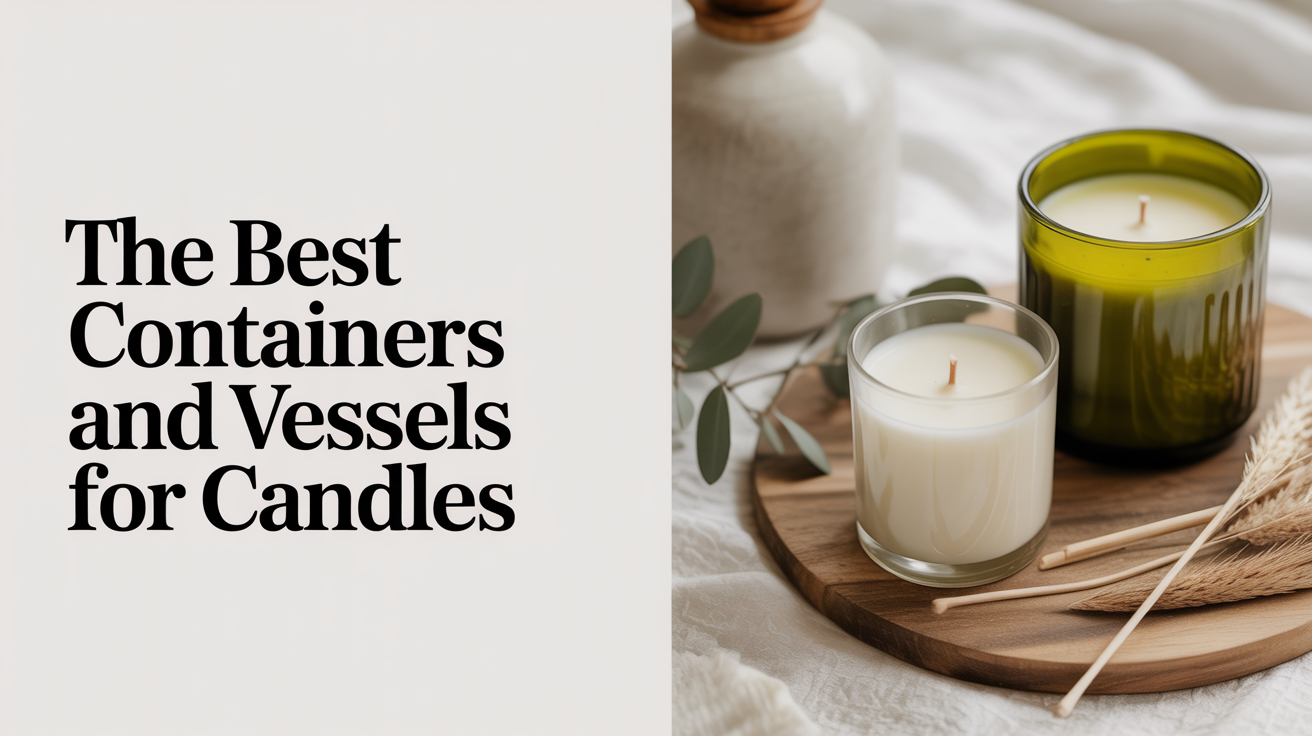
Choosing a container feels like a small decision, but it shapes almost everything else about your candle. The diameter controls which wick size you need. The material determines whether the vessel can handle prolonged heat without cracking. The height affects how the melt pool forms and whether your customer (or you) can safely reach down to relight a short wick at the bottom.
The good news is that once you understand a few basic rules, the options open up considerably. Glass jars from a kitchen store, tins from a craft supplier, ceramic mugs from your own cabinet, even concrete vessels you cast yourself can all work beautifully as long as they meet a short list of safety criteria. This guide walks through those criteria, the most practical container types, how to match size to your project, and where to find good stock without paying boutique prices.
What Makes a Container Safe for Candles
Not every pretty jar belongs near a lit wick. The first question to ask is whether the material can handle sustained low heat without cracking, leaching, or releasing fumes. A candle burns for hours, and the vessel wall near the wick can reach 120 to 150°F (49 to 65°C) or higher depending on the wax type and wick size. That is far below what most glass and metal can handle, but it is enough to damage thin crystal, certain glazed ceramics, and any vessel with a crack or chip already in it.
Heat resistance: Look for borosilicate glass (labeled "heat-resistant" or used in lab and kitchen products), tempered glass, or straight-sided soda-lime glass at least 3 mm thick. Standard mason jars are a reliable baseline. For ceramics, a high-fire glaze (stoneware or porcelain fired above 2,000°F / 1,093°C) is generally safe; low-fire earthenware can be more porous and is harder to trust for repeated burning.
No cracks, chips, or seams at the base: Even a hairline crack can propagate when the glass heats and cools repeatedly. Inspect every vessel before you pour, and discard any that show damage.
Wide enough opening: A container narrower than about 2 inches (5 cm) at the top traps heat more aggressively and makes wick trimming awkward. Beginners are usually better served by vessels 3 to 4 inches (7.5 to 10 cm) in diameter until they have a feel for wick sizing.
No lead or cadmium in the glaze: Vintage and imported ceramics sometimes contain heavy metals in their glazes. If you are unsure about a thrifted piece, use a lead-test swab kit before pouring.
The Most Common Types of Candle Containers
Glass jars are the most forgiving starting point. They let you see the wax level and color, they clean out easily for a second pour or reuse, and they are available in dozens of sizes. Wide-mouth mason jars, apothecary jars with straight sides, and short tumbler-style glasses all work well. Avoid thin-walled decorative glass, footed wine glasses, and anything with a significant taper that would concentrate heat at the base.
Metal tins are the second most popular choice for beginners. They conduct heat more evenly than glass, they will not shatter if dropped, and they are compact enough to mail without special packaging. The standard sizes run from 2 oz (57 g) up to 16 oz (454 g). The main limitation is that you cannot see the wax from the outside, so diagnosing a tunneling problem requires digging in or waiting until the candle burns down.
Ceramic vessels add a handmade feel that is hard to replicate with glass or tin. Mugs, small bowls, and short planters are all candidates as long as the glaze meets the heat and safety criteria above. One practical note: ceramic holds heat longer than glass after you extinguish the flame, so the vessel stays warm to the touch for a few minutes. Label any ceramic candle clearly so the recipient knows not to grab it right after blowing it out.
Concrete has become popular for a raw, industrial aesthetic. You can buy pre-cast concrete vessels or cast your own using silicone molds. Concrete is heavy, which limits shipping, and it is porous enough that you may want to seal the interior with a thin coat of beeswax or a purpose-made sealant before your first pour. Because different wax types behave differently against porous surfaces, test a small batch before committing to a full production run.
Upcycled containers such as cleaned food jars, teacups, or vintage tins can work, but apply the same checklist. Jars that held acidic foods (tomatoes, vinegar-brined pickles) sometimes have internal etching that weakens the glass. Give them a close look under good light before pouring.
How to Match Container Size to Your Wax and Wick
Container diameter is the key variable. Wick manufacturers size their products by the diameter of the burn pool they are designed to create, and that burn pool needs to reach the edges of the vessel within two to three hours of burning. If the pool never reaches the glass wall, you will get tunneling. If the wick is too large for the container, the flame burns too hot and the vessel overheats.
A practical starting framework:
- 2 to 2.5 inch (5 to 6.4 cm) diameter: small single-wick candles, travel tins, sample sizes
- 3 to 3.5 inch (7.5 to 9 cm) diameter: the most common range for 8 to 10 oz jars, one wick
- 4 inches (10 cm) and above: often benefits from two wicks to heat the melt pool evenly
Container height matters less than diameter for wick selection, but taller vessels concentrate more fragrance above the melt pool and can feel stronger-scented than a shorter vessel poured with the same blend. If you are working with soy wax, keep in mind that soy has a lower melt point than paraffin (around 115 to 135°F / 46 to 57°C for most container grades), so it is less demanding on your vessel but also more sensitive to ambient temperature during the pour and cure.
Fill weight is worth calculating before you buy. A standard formula: multiply the vessel's fluid ounce capacity by 0.8 to estimate the wax weight in ounces. An 8 oz jar holds roughly 6.4 oz of wax plus fragrance. This keeps you from over-ordering containers for a given batch size.
Where to Find Good Candle Containers
Dedicated candle-supply retailers (Candle Science, Brambleberry, the Flaming Candle, and similar) stock tested jars and tins in bulk, with weight and diameter specs already listed. Buying from a supplier who knows the candle market means the glass has already been vetted for heat tolerance.
Kitchen and grocery stores are a reliable source for mason jars and straight-sided glass containers. Ball and Kerr wide-mouth jars in the 4 oz, 8 oz, and 16 oz sizes are safe, widely available, and inexpensive enough to practice with.
Restaurant supply stores carry tempered glass jars and ramekins in bulk at low per-unit cost, which makes them practical if you are scaling up.
Thrift stores and estate sales can yield interesting ceramic pieces at low cost, but apply the safety checklist every time. Unusual shapes and vintage glazes make for attractive candles, but they also introduce variables that standard commercial jars do not.
If you are working with beeswax, note that beeswax burns hotter than soy and coconut blends, with a melt point closer to 144 to 150°F (62 to 66°C). That extra heat makes vessel selection more important: stick with heavier glass or metal rather than thin decorative pieces when pouring a beeswax blend.
Frequently Asked Questions
Can I reuse a glass jar from food for candles? Yes, with conditions. Clean out any residue thoroughly, inspect for chips and cracks under good light, and make sure the glass is at least moderately thick. Jars that held acidic foods may have internal etching, so look closely at the interior surface. If it looks cloudy or pitted, pass on it.
What temperature can a standard mason jar handle? Standard soda-lime mason jars (Ball, Kerr) are rated for canning, which involves sustained temperatures up to 212°F (100°C) in a water bath. A burning candle typically heats the jar wall to well below that, so mason jars are a safe choice for most wax types. Avoid pouring wax into the jar while the glass is cold straight from a refrigerator, as sudden temperature shifts can stress the glass.
Do I need to preheat my container before pouring? Not usually, but it helps in cold weather. If your workspace is below about 65°F (18°C), a cold jar can cause the wax to cool too quickly along the edges and pull away from the glass as it contracts. A brief warm-up in a low oven (around 150°F / 65°C for five minutes) or on a heating pad can reduce that effect.
Is it safe to use mugs I already own? Mugs fired at high temperatures (stoneware or porcelain) are generally fine. Check the bottom for a firing temperature stamp or look up the manufacturer. Avoid fine bone china, thin-walled mugs, or anything with a cracked handle, since stress at one part of the mug can travel to the base during repeated heating and cooling.
How full should I fill a candle container? Leave at least a half inch (1.3 cm) of clearance at the top. Filling to the brim reduces airflow around the flame, makes the candle harder to blow out cleanly, and can cause hot wax to spill if the wick is slightly oversized. Most commercial candles stop at about three-quarters to seven-eighths of the vessel height for the same reason.